



How to Size an Electric Vibrator for Silo Discharge Without Damaging the Wall
How to Size an Electric Vibrator for Silo Discharge Without Damaging the Wall

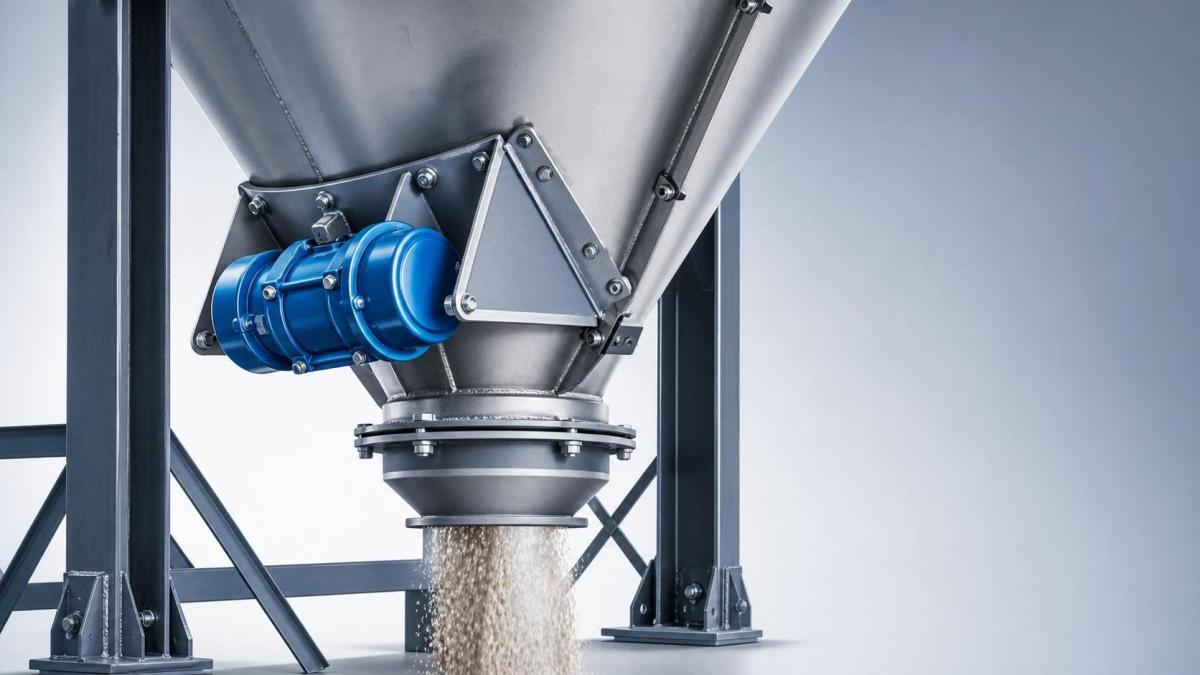
Choosing the right electric vibrator for silo discharge is a structural decision, not only a flow aid choice.
A poorly sized unit may improve flow for a while, then create cracks, dents, fatigue, or loose welds.
A correctly sized electric vibrator for silo discharge keeps material moving while protecting the shell, hopper, and support frame.
This matters even more with cohesive powders, damp aggregates, cement blends, minerals, and recycled bulk solids.
In practical projects, the goal is simple: enough force to break friction and bridging, but not enough to overstress the wall.
Start With the Real Discharge Problem
Sizing begins with the blockage type, because not every flow problem needs the same vibration strategy.
Some silos suffer from arching at the outlet. Others develop rat-holing higher in the cone.
Fine powders may compact. Sticky materials may cling to the wall instead of releasing cleanly.
That means the best electric vibrator for silo discharge depends on material behavior, not only on silo volume.
- Identify the bulk density range, not just one nominal value.
- Check moisture variation across seasons and batches.
- Review particle size distribution and fines content.
- Confirm whether the issue is bridging, sticking, or compaction.
This first step prevents oversizing, which is one of the most common reasons for wall damage.
Match Vibration Force to the Silo Zone
The force requirement should be tied to the active zone that must be energized.
For most installations, the cone or lower transition section is the critical area.
Trying to shake the full silo body usually wastes energy and increases structural risk.
A practical rule is to size the electric vibrator for silo discharge around the mass resisting flow near the outlet.
That includes product load, wall friction, and dead zones created by geometry.
Recent project trends show more teams favor shorter duty cycles with targeted force instead of one oversized motor.
Do Not Ignore Wall Strength and Reinforcement
Even the right discharge result can hide a wrong structural setup.
An electric vibrator for silo discharge transfers dynamic loads into steel plates, weld seams, stiffeners, and support legs.
If the wall is thin or unsupported, the shell can resonate instead of transmitting useful energy to the material.
That is when deformation and fatigue begin.
Before final selection, verify these points:
- Plate thickness in the mounting area.
- Distance to welds, corners, and nozzles.
- Presence of ribs, pads, or external brackets.
- Natural frequency of the local structure, if available.
If the structure is marginal, a reinforcement plate or mounting beam may be necessary before installing the vibrator.
That usually costs less than repairing cracked steel later.
Choose Mounting Position Before Final Motor Size
Mounting location changes performance as much as force rating.
A vibrator placed too high may shake product that already flows, while the outlet still blocks.
A vibrator placed too low can overwork the discharge spout and local wall plate.
For many conical silos, the best starting point is the lower third of the hopper.
From there, field tests can confirm whether one unit or two smaller units work better.
- Single-side mounting suits smaller silos and lighter products.
- Opposed units can balance loads on wider hoppers.
- Intermittent operation reduces heat, noise, and wall stress.
In other words, location can reduce the required size of the electric vibrator for silo discharge.
Use Duty Cycle and Controls to Prevent Overstress
Continuous vibration is rarely the smartest operating mode.
Short pulses often clear build-up faster while limiting cumulative stress on the wall.
This also lowers energy use and extends motor bearing life.
A timer, level switch, or PLC logic can trigger the electric vibrator for silo discharge only when flow resistance appears.
That gives better process control than leaving the unit running through every cycle.
A useful site checklist includes:
- Set pulse duration based on actual release time.
- Add stop delays to avoid repeated hammering.
- Monitor bolt torque after commissioning.
- Inspect welds during early operation weeks.
A Practical Sizing Path for Reliable Results
A reliable sizing decision usually follows a straightforward sequence.
- Define the material and worst-case flow condition.
- Identify the exact blockage zone.
- Review hopper geometry and wall strength.
- Select mounting position and expected transmission path.
- Choose force level and duty cycle for testing.
- Validate vibration response during commissioning.
This process keeps the electric vibrator for silo discharge tied to measured conditions instead of guesswork.
That is the clearest way to protect equipment, reduce shutdowns, and maintain stable discharge performance.
For broader bulk handling projects, Weifang Yuansheng Magnetic & Electrical Equipment Co., Ltd. also supplies related systems for separation, conveying, metering, and process support.
If your line also involves lifting and material handling around ferrous loads, you can review the Lifting Electromagnet as a complementary option.
The best result comes from treating discharge vibration as part of the whole system, not as an isolated motor purchase.
Search from here
Get Free Quotes