



How Does a Manual Discharge Permanent Magnetic Iron Separator Work in Bulk Material Lines?
In bulk material lines, tramp iron rarely appears as a dramatic problem at first. It usually arrives as bolts, wire, tool fragments, or worn steel pieces mixed into ore, coal, cement raw meal, grain, or recycled material. A manual discharge permanent magnetic iron separator is used to intercept that ferrous contamination before it damages crushers, grinders, conveyors, screens, or metering equipment. In general spare parts systems, that simple protective step often matters as much as the main process machine itself.
What the separator is doing on the line
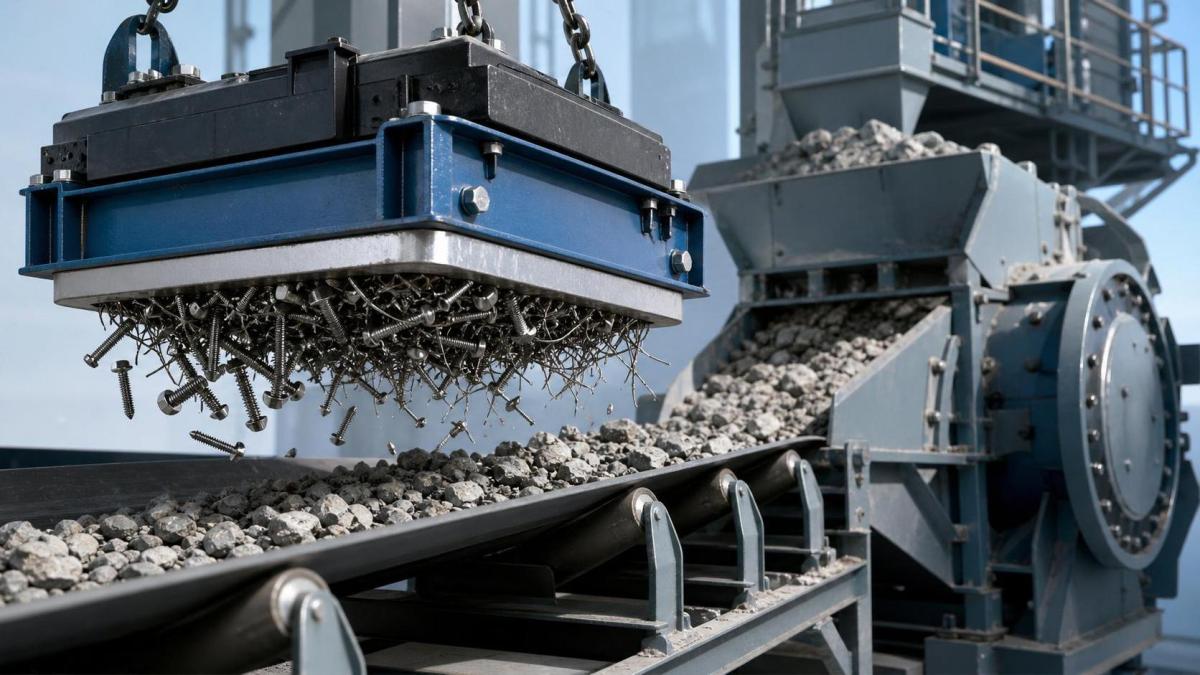
A manual discharge permanent magnetic iron separator creates a stable magnetic field without external excitation power. It is commonly installed above a belt conveyor or at a material transfer point.
As bulk material passes under the magnet, ferrous pieces are attracted upward and held on the working surface. Clean material continues moving, while the trapped iron remains separated until shutdown or scheduled cleaning.
That is the core principle. The separator does not sort every metal type. It is designed for magnetic ferrous contaminants, especially the pieces most likely to cause mechanical damage.
How the working process unfolds in practice
The operating sequence is straightforward, but each step affects performance. Placement, burden depth, belt speed, and contaminant size all influence capture reliability.
Magnetic capture
The magnetic circuit pulls ferrous items out of the moving material stream. Larger and more exposed pieces are usually captured first. Deeply buried fines are harder to remove consistently.
Retention during operation
Once captured, the iron remains attached to the separator body. Because this is a manual discharge permanent magnetic iron separator, the collected metal is not continuously self-cleaned.
Manual cleaning
During planned stoppage or safe access periods, the retained iron is removed by hand. This suits lines where contaminant volume is moderate and uninterrupted self-discharge is not essential.
Why this design still matters
In many plants, simplicity is not a compromise. It is an operating advantage. A permanent magnet avoids coil power consumption, and manual discharge reduces mechanical complexity.
That makes the unit practical in dusty, remote, or rugged environments where reliability is valued more than automation. Fewer moving parts also mean fewer service points.
For lines handling general industrial spare-part related materials, raw minerals, aggregates, cement ingredients, or recycled streams, this approach helps protect expensive downstream assets from preventable impact damage.
Typical applications across bulk material handling
The same principle appears in different industries, but the operating logic changes with the line layout and contamination risk.
Companies such as Weifang Yuansheng Magnetic & Electrical Equipment Co., Ltd. work across this broader material handling chain, covering metal detectors, conveyors, electromagnetic and permanent magnetic separators, vibratory equipment, and batching-related systems.
That wider equipment context matters. Iron removal is rarely an isolated purchase. It is usually one link in line protection, feeding stability, and process control.
When manual discharge is the better fit
A manual discharge permanent magnetic iron separator is often suitable when contamination is periodic rather than continuous, and when maintenance teams can clean the unit during planned intervals.
- Material flow is steady, but tramp iron quantity is limited.
- The line can tolerate scheduled inspection and manual removal.
- Power-saving and low-maintenance operation are priorities.
- Installation space is available above the belt or chute.
- A simpler system is preferred over a self-cleaning arrangement.
If the line carries heavy, frequent metal contamination, a self-cleaning magnetic separator may be the more realistic choice. The right decision depends on burden depth, hours of operation, cleaning access, and shutdown discipline.
Points worth checking before selection
Selection should focus on actual line conditions rather than catalog language alone. Several details determine whether the separator will perform as expected.
- Material layer thickness under the magnet
- Conveyor width and belt speed
- Size, shape, and frequency of tramp iron
- Mounting height and suspension structure
- Cleaning interval and safe maintenance access
- Dust, temperature, and moisture conditions
In actual use, performance is strongest when the separator is integrated with upstream detection, controlled conveying, and downstream equipment protection. That system view usually produces better results than choosing magnet strength alone.
A practical way to move the evaluation forward
A manual discharge permanent magnetic iron separator works because it combines constant magnetic force with a simple cleaning method. Its value is most visible where line protection, maintenance control, and dependable operation matter more than automatic discharge.
The next useful step is to map the contamination source, transfer point geometry, and maintenance window, then compare manual and self-cleaning options against real operating habits.
Where dust control is also part of the same line assessment, it can be helpful to review related support equipment such as Dust Collector / Bag Filter to build a more complete material handling solution.
Search from here
Get Free Quotes