



Electromagnetic Electric Vibrator Selection Guide: Voltage, Force, and Duty Cycle
Choosing an electromagnetic electric vibrator is rarely a simple catalog exercise. Voltage fit, vibration force, and duty cycle shape how reliably material moves, how stable upstream and downstream equipment remains, and how long the unit can operate before maintenance becomes a recurring issue.
In general spare parts applications, that decision affects feeders, hoppers, screens, chutes, and compact conveying sections. It also connects with broader process lines where separation, batching, and material purity must stay consistent across repeated operating cycles.
For operations handling powders, granules, clinker, ore, or mixed bulk solids, the right electromagnetic electric vibrator supports flow control rather than simply adding motion. That distinction matters when throughput targets are tight and process interruptions carry a real production cost.
Why parameter matching matters in real production
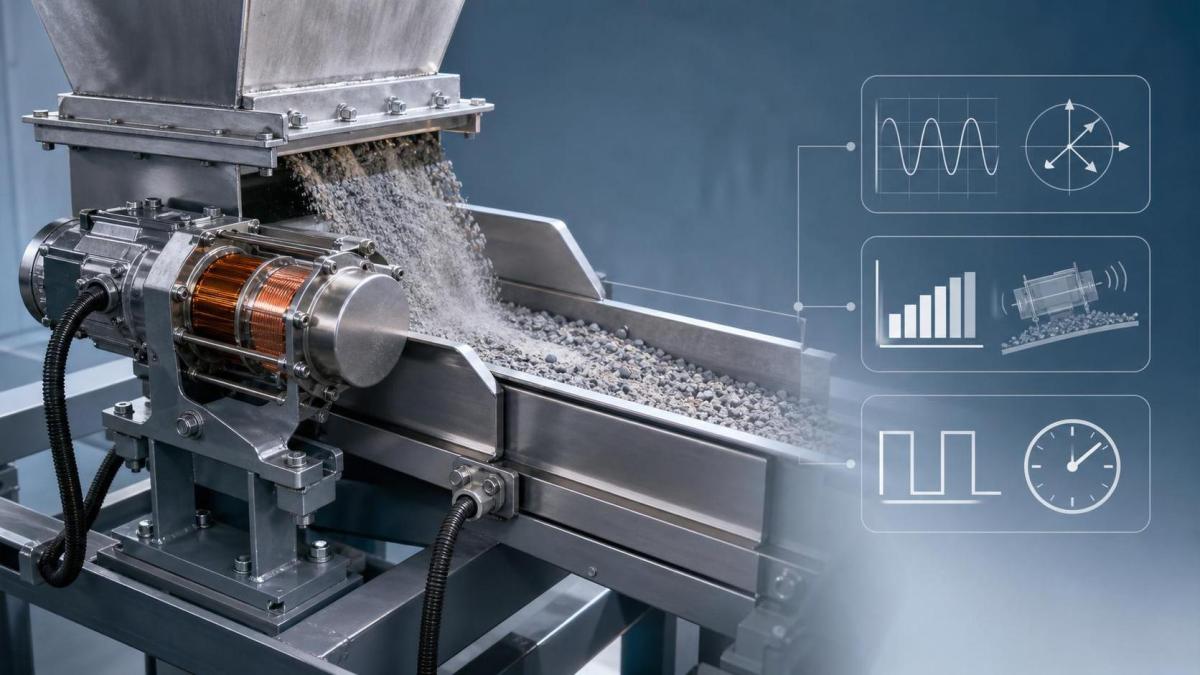
An electromagnetic electric vibrator works by converting electrical input into controlled vibration. On paper, models may look similar. In use, small differences in electrical compatibility or force output can change feeding accuracy, response speed, and wear on connected structures.
This is especially relevant in integrated systems. Companies such as Weifang Yuansheng Magnetic & Electrical Equipment Co., Ltd. work across metal detection, magnetic separation, conveyors, metering devices, and batching systems, where each component influences line stability.
When a vibrator is undersized, material may bridge or discharge unevenly. When it is oversized, fine control becomes harder, supporting frames fatigue faster, and unnecessary energy use follows. A balanced specification usually delivers better operating economics than a higher nominal rating.
Voltage is more than a nameplate detail
Voltage selection should begin with the actual plant power supply, not the preferred stock model. An electromagnetic electric vibrator must match available voltage and frequency conditions to avoid weak excitation, unstable stroke, overheating, or shortened coil life.
A practical review usually includes supply tolerance, control cabinet design, start-stop frequency, and whether variable control is required. In some installations, the issue is not only rated voltage, but how consistently the unit performs during line fluctuation.
Points worth checking early
- Rated voltage against plant supply conditions
- Frequency compatibility for stable excitation
- Controller or rectifier requirements
- Cable, insulation, and environmental protection level
- Response under frequent switching cycles
Ignoring these details can create symptoms that look mechanical but are actually electrical. In many cases, poor feeding regularity begins with mismatched power conditions rather than a defect in the vibrator itself.
How to judge vibration force with more accuracy
Vibration force should be evaluated against the material behavior and the structure being driven. A hopper discharging dry granules demands a different force profile than a tray feeding cohesive powder or damp fine particles.
The best selection usually comes from matching force to load mass, desired amplitude, installation angle, and flow objective. Some applications need quick loosening. Others need stable micro-feeding with minimal fluctuation.
An oversized electromagnetic electric vibrator can appear safer during selection. In practice, it often reduces controllability. That is why test data, material bulk density, and structural limits deserve as much attention as nominal force values.
Duty cycle defines service life and thermal risk
Duty cycle is one of the most overlooked parameters in electromagnetic electric vibrator selection. It determines how long the unit runs within each cycle and how much time it has to dissipate heat.
A model that performs well in intermittent use may struggle in near-continuous operation. Coil temperature, insulation aging, and output consistency all depend on this operating pattern.
Typical assessment questions
- Will the unit run continuously or in short pulses?
- How often does the process start and stop per hour?
- Is ambient temperature high because of kilns, dryers, or enclosed cabinets?
- Will dust accumulation reduce cooling performance?
In batching, cement handling, and powder processing, these questions are not secondary. They influence whether a selected unit keeps stable output after weeks of production, not just during a short commissioning test.
Selection should follow the process, not only the component
A useful evaluation starts with the full process path. Material characteristics, line capacity, mounting method, control logic, and surrounding equipment all affect electromagnetic electric vibrator performance.
For example, if a line includes magnetic separation, conveying, and metered discharge, vibration quality can influence the consistency of material presentation. That in turn affects downstream detection, separation efficiency, and dosing accuracy.
This broader view is often where better decisions emerge. The vibrator should support the system objective, whether that means precise feeding, anti-blocking action, or steady transport into a separation or batching stage.
A practical shortlist for comparison
When comparing options, it helps to build a short matrix rather than rely on catalog descriptions alone.
- Confirm voltage, frequency, and control method
- Match vibration force to real load and material behavior
- Check duty cycle against thermal operating conditions
- Review installation stiffness and support strength
- Ask for application references with similar materials
- Consider inspection access and maintenance intervals
That approach makes comparisons clearer and reduces the risk of selecting an electromagnetic electric vibrator that fits the drawing but not the production reality.
Where to look next
The next step is usually to align electrical data, material properties, and operating cycle records before final model selection. Once those inputs are organized, differences between candidate units become easier to judge and easier to defend internally.
If the application also involves powder purity or ferrous contamination control, it can be useful to review related process equipment at the same time. In that context, Powder Iron Remover may be a relevant reference when assessing the full handling and separation route.
Search from here
Get Free Quotes