



Industrial Magnetic Separator Types Explained for Recycling, Mining, and Food Lines
Choosing an industrial magnetic separator is rarely a minor equipment decision. In recycling, mining, and food processing, separator type affects purity targets, downstream wear, and line stability. A good match removes ferrous contamination efficiently, while a poor one can leave metal in the product or overload the process with unnecessary maintenance.
That is why separator selection is drawing more attention across general industrial components and material handling systems. When lines include conveyors, feeders, detectors, and metering equipment, magnetic separation is not an isolated step. It becomes part of a broader control strategy for product quality and equipment protection.
How industrial magnetic separator systems fit into real production lines
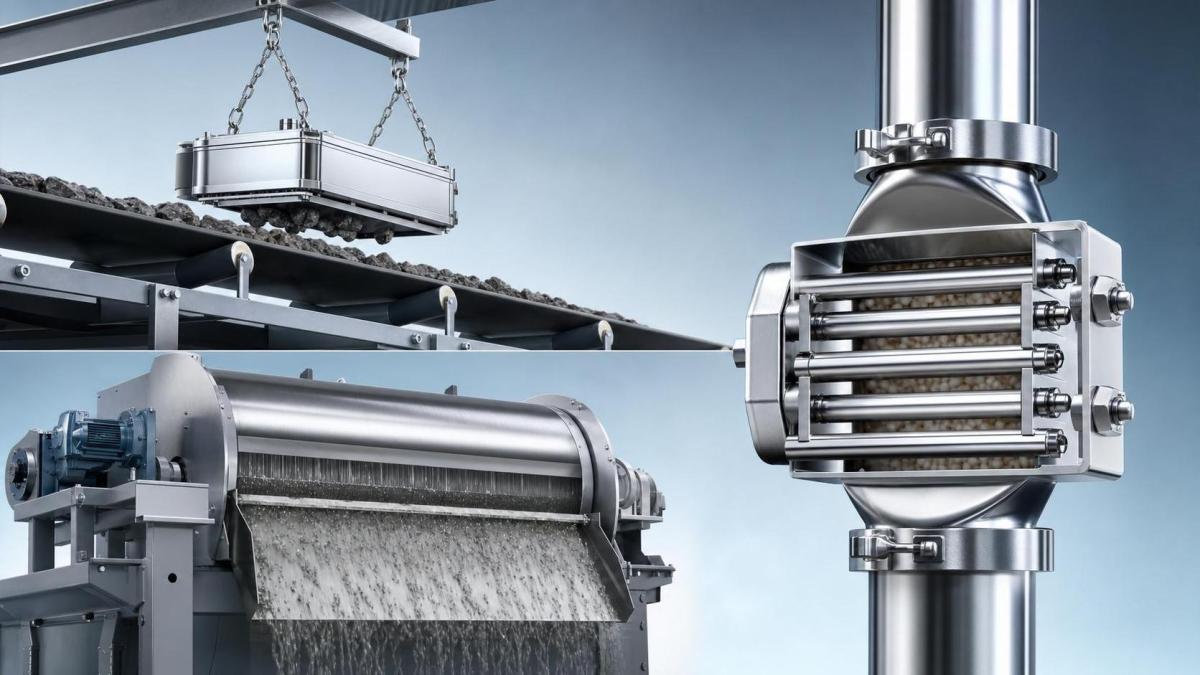
An industrial magnetic separator uses a magnetic field to attract and remove ferrous material from bulk solids, granules, powders, or mixed waste streams. The principle is simple. The engineering detail is where performance differences appear.
Separation efficiency depends on several factors. Particle size matters. Material depth matters. Belt speed matters. Moisture, stickiness, and the shape of tramp iron also change the result.
In practical terms, the separator must suit both the material and the line layout. A recycling plant handling shredded scrap needs a different magnetic setup than a food line protecting flour, sugar, or packaged goods.
This is also where suppliers with broader equipment knowledge bring value. Companies such as Weifang Yuansheng Magnetic & Electrical Equipment Co., Ltd., with experience in metal detectors, conveyors, electromagnetic iron separators, permanent magnetic iron separators, and batching-related systems, operate in the wider context where separation performance meets process design.
Main separator types and where each one performs best
The main separator families are easy to name, but the useful comparison comes from understanding operating conditions. The table below highlights the most common choices.
A permanent magnet is often preferred when operating simplicity matters. Electromagnetic units are usually chosen when burden depth is larger or the application needs a stronger, adjustable field.
Why type selection changes by industry
Recycling
Recycling lines deal with variable feed. Shredded metal, plastics, wood, and municipal waste create inconsistent burden depth. Here, the industrial magnetic separator often acts as both a recovery tool and a safeguard for crushers and sorters.
Suspended magnets and overband systems are common because they work above conveyors and remove larger ferrous pieces continuously. Durability and ease of cleaning matter as much as magnetic strength.
Mining
Mining applications usually focus on tramp iron removal, ore upgrading, or both. The separator must tolerate abrasive material, heavy throughput, and harsh operating conditions. Reliability under dust, vibration, and long shifts is a basic requirement.
In dry systems, drum and overband units are common. In wet beneficiation, magnetic separators are selected around ore characteristics, recovery targets, and slurry behavior rather than line convenience alone.
Food lines
Food processing raises a different priority. The goal is precise contamination control close to the product stream. Hygiene, cleanability, and validation become central, especially for powders, grains, spices, and finished ingredients.
In this setting, the industrial magnetic separator is usually compact and integrated into chutes, pipelines, or gravity flow points. The strongest option is not always the best one. Access for inspection and routine cleaning can be more decisive.
What deserves closer attention during evaluation
Many comparisons stop at gauss level, but field strength alone does not predict line performance. A more useful evaluation looks at operating fit.
- Material condition: dry, wet, free-flowing, sticky, coarse, or fine.
- Contaminant profile: bolts, wire, wear fragments, or fine iron filings.
- Installation point: head pulley, cross belt, chute, hopper, or pipeline.
- Cleaning method: manual, self-cleaning, or quick-release access.
- Throughput impact: whether the separator interrupts flow or supports continuous operation.
- System compatibility: alignment with conveyors, feeders, detectors, and control equipment.
Simple layout mistakes can reduce capture performance sharply. If the magnet is too far from the product stream, if burden depth is too high, or if material spreads unevenly, even a strong industrial magnetic separator may underperform.
A practical way to narrow the options
A clear comparison usually starts with three questions. What metal must be removed? Where in the line should removal happen? What operating conditions cannot be compromised?
From there, it becomes easier to decide between permanent and electromagnetic systems, dry and wet separation, and bulk protection versus fine purification. That approach is more reliable than choosing by catalog appearance or headline strength figures.
For applications where material travels in a relatively shallow, controlled layer, a flat-profile solution may be worth reviewing. A reference point is Flat Magnetic Separator, which can help when line layout, cleaning access, and stable separation performance all need to be balanced carefully.
The next step is usually to map actual feed conditions, belt or chute dimensions, contamination size range, and maintenance limits. Once those factors are documented, comparing any industrial magnetic separator becomes more precise, and the final choice is far more likely to support long-term line performance.
Search from here
Get Free Quotes