



Suspended Permanent Magnetic Iron Separator vs Inline Type: Main Differences
Suspended Permanent Magnetic Iron Separator vs Inline Type: Main Differences
Choosing between a suspended permanent magnetic iron separator and an inline type can directly affect metal removal efficiency, equipment layout, and maintenance costs.
For bulk material systems, the wrong choice often creates poor separation, extra downtime, and unnecessary operating adjustments.
This guide explains how each design works, where each fits best, and what should drive the final decision.
How a Suspended Permanent Magnetic Iron Separator Works
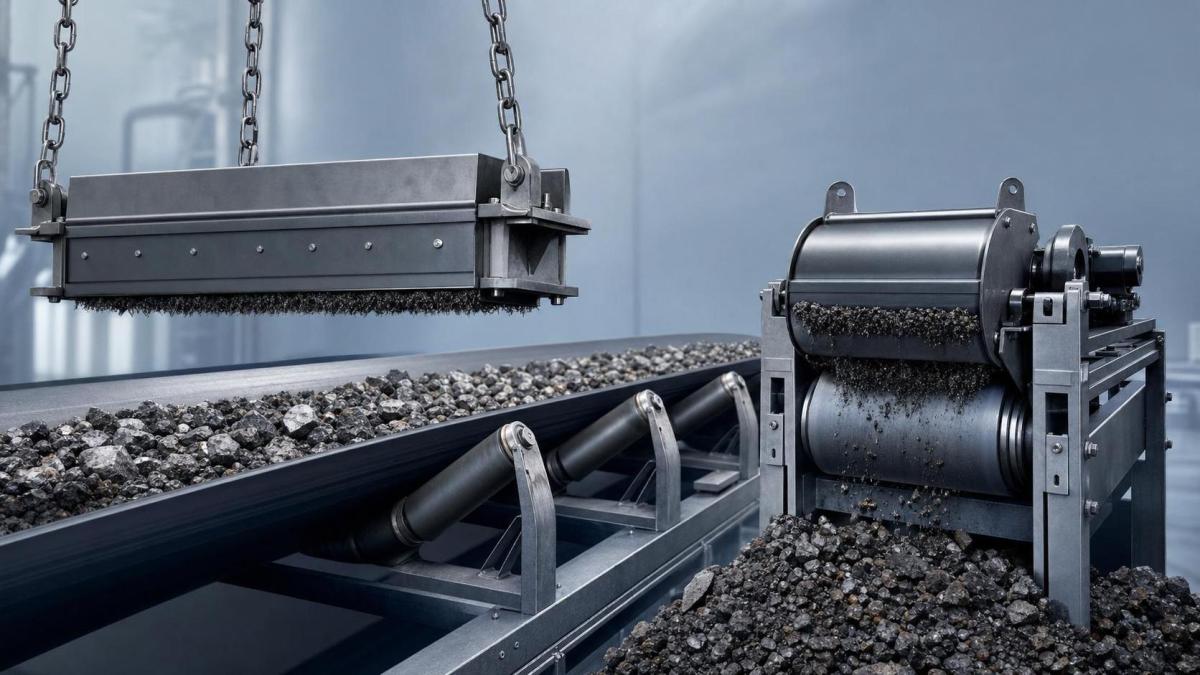
A suspended permanent magnetic iron separator is mounted above a conveyor belt or material flow path.
Its magnetic field attracts ferrous contaminants from moving material before those metals reach downstream equipment.
This setup is common in mining, cement, aggregates, recycling, grain, and general industrial conveying lines.
There are usually two installation styles.
- Crossbelt installation, where the magnet sits across the conveyor.
- Inline installation, where the magnet follows the material flow direction.
Both are forms of a suspended permanent magnetic iron separator, but they serve different separation goals.
What Makes Suspended and Inline Types Different
The main difference starts with magnetic coverage and the way tramp iron moves through the field.
1. Installation Direction
A standard suspended permanent magnetic iron separator is often mounted crosswise above the conveyor.
An inline type is mounted in the same direction as material travel, usually over the head pulley area.
2. Best Capture Target
Crossbelt units are better for random tramp iron spread across a wider belt surface.
Inline types usually perform better when the burden is centered and iron pieces are deeper in the material stream.
3. Separation Depth
An inline suspended permanent magnetic iron separator often gives stronger effective reach at the discharge point.
That happens because material is thinner and more open as it leaves the head pulley.
Crossbelt units can still work well, but thick burdens may reduce pickup efficiency.
4. Space and Layout
A suspended permanent magnetic iron separator needs enough vertical clearance for safe magnetic suspension and cleaning.
Inline types may fit better where the discharge end offers cleaner access and more usable height.
In older plants, available space often decides the selection before performance details do.
Performance Comparison in Real Material Handling
From a practical view, neither type is universally better.
The right suspended permanent magnetic iron separator depends on burden depth, belt speed, iron size, and conveyor position.
A suspended permanent magnetic iron separator also performs differently depending on manual or self-cleaning configuration.
For continuous production, self-cleaning models usually reduce labor and keep removal performance stable.
How to Choose the Right Type
Selection should follow operating conditions, not catalog pictures.
Before choosing a suspended permanent magnetic iron separator, check these points carefully.
- Measure conveyor width and belt speed.
- Confirm burden thickness and material density.
- Estimate tramp iron size, shape, and frequency.
- Review available suspension height and structural supports.
- Check whether removal is needed before crushers, mills, or screens.
- Decide whether cleaning should be manual or automatic.
In actual operations, plant teams often focus only on magnet strength.
That is incomplete.
Suspension height, belt trajectory, and material profile can change separation results just as much.
Common Mistakes and Practical Advice
Several selection mistakes appear repeatedly in bulk handling projects.
- Choosing an inline type when material is not centered on the belt.
- Using a suspended permanent magnetic iron separator too high above the conveyor.
- Ignoring discharge trajectory at the head pulley.
- Underestimating future throughput increases.
- Picking manual cleaning for heavy contamination loads.
A better approach is to match the suspended permanent magnetic iron separator to the whole conveying system.
This includes upstream feeding stability and downstream equipment sensitivity.
When the line handles powders or fine dry materials, different iron removal technologies may also be worth comparing.
Final Takeaway
The choice between crossbelt and inline designs comes down to material behavior, conveyor geometry, and contamination risk.
A suspended permanent magnetic iron separator works best when its installation method matches the actual flow pattern.
For plants handling dry powder materials or requiring deeper staged iron removal, broader system options should also be reviewed.
One useful reference is YSDC Series Dry Tandem Electromagnetic Powder Iron Removal System, which supports more targeted powder iron removal needs.
Weifang Yuansheng Magnetic & Electrical Equipment Co., Ltd. provides iron removal, magnetic separation, conveying, and metering solutions across multiple industrial processes.
A clear review of layout, material characteristics, and removal targets will lead to a more reliable separator choice and lower long-term operating cost.
Search from here
Get Free Quotes