



Electric Vibrator for Hopper: How to Prevent Bridging and Material Hang-Up
Electric Vibrator for Hopper: How to Prevent Bridging and Material Hang-Up

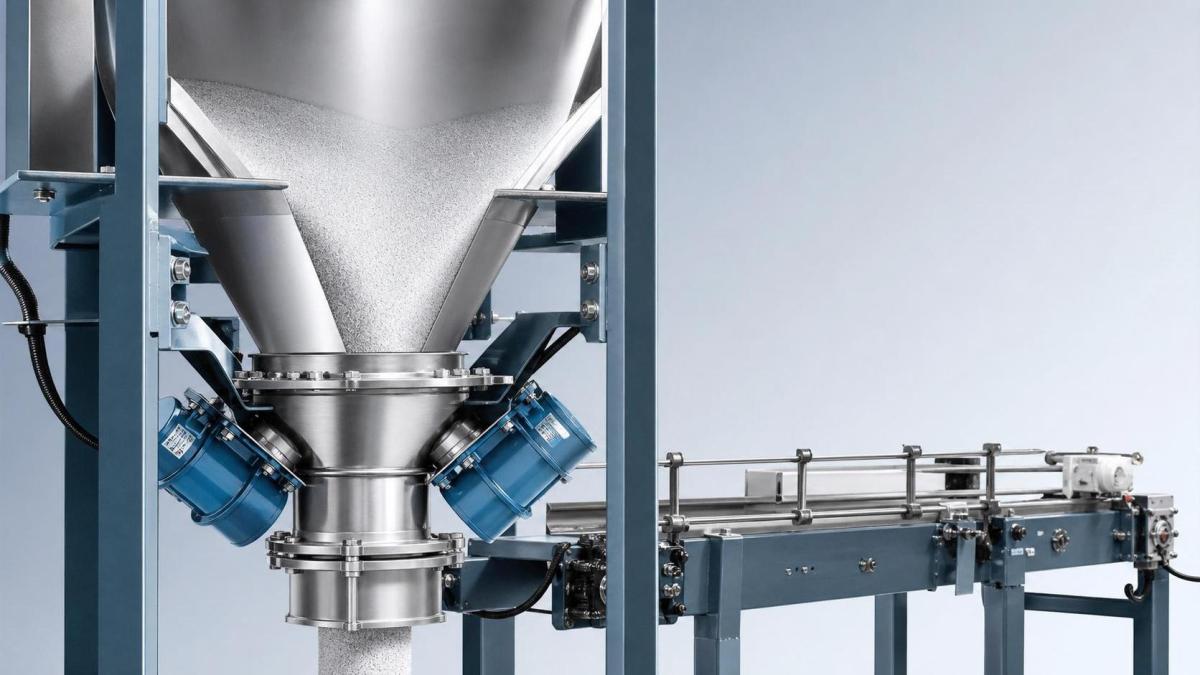
Material bridging and hang-up can slow production, cause uneven discharge, and increase cleanup time. These issues often begin inside the hopper, long before operators notice a full blockage.
A properly selected electric vibrator for hopper systems helps keep bulk solids moving. It reduces dead zones, improves flow consistency, and supports more predictable downstream feeding.
In daily operation, this matters more than many teams expect. Small flow interruptions can quickly turn into production delays, unstable batching, and unnecessary mechanical stress.
The good news is that most hopper flow problems are manageable. Once the cause is clear, the right electric vibrator for hopper use becomes a practical and cost-effective solution.
Why Bridging and Hang-Up Happen in Hoppers
Bridging happens when material forms a stable arch above the discharge opening. Material hang-up usually appears when particles stick to hopper walls and stop sliding downward.
Several conditions make this more likely:
- Fine or moist powders that compact easily
- Irregular particle size or poor bulk density
- Rough internal wall surfaces
- Shallow hopper angles
- Undersized outlet openings
- Material segregation during filling
From an operating viewpoint, the material itself is only part of the story. Hopper geometry, refill pattern, and discharge speed also affect whether material keeps flowing or locks in place.
This is why the same powder may behave well in one line and fail in another. The application environment always shapes the final result.
How an Electric Vibrator for Hopper Applications Solves the Problem
An electric vibrator for hopper service creates controlled mechanical vibration on the hopper wall. That vibration breaks friction between material and steel, helping bulk solids release and move downward.
When set correctly, vibration can prevent arching before it becomes a full blockage. It also reduces the need for manual poking, hammering, or frequent shutdowns.
In practical terms, the electric vibrator for hopper use improves:
- Discharge continuity
- Feed rate stability
- Batching accuracy
- Operator efficiency
- Equipment uptime
More importantly, vibration should be controlled, not excessive. Too little energy will not break the bridge. Too much can damage mounts, loosen fasteners, or compact some materials even harder.
How to Choose the Right Electric Vibrator for Hopper Performance
Selection starts with the material, not the motor size alone. A lightweight powder and a coarse granular mix do not need the same vibration pattern.
Focus on these factors before choosing an electric vibrator for hopper installation:
- Material properties. Check moisture, particle size, flowability, and bulk density.
- Hopper size and wall thickness. Larger structures need different force output and mounting support.
- Outlet design. Narrow outlets often need more focused vibration assistance.
- Duty cycle. Continuous and intermittent use change heat load and service life.
- Power and control. Adjustable control helps match vibration to process demand.
It is also wise to review the mounting position. In many cases, placing the vibrator slightly above the outlet gives better energy transfer than mounting it too high on the cone.
If the hopper is large or the material is especially stubborn, one unit may not be enough. A balanced multi-point arrangement may perform better than a single oversized machine.
Common Installation and Operating Mistakes
Even a good electric vibrator for hopper applications can underperform when installation is weak. Many flow issues continue because the real problem is setup quality.
Watch for these common mistakes:
- Mounting on a flexible or unsupported wall section
- Using vibration force that does not match the hopper load
- Running continuously when pulsed operation would work better
- Ignoring bolt loosening and structural fatigue
- Treating all materials as if they flow the same way
A better approach is to test under real production conditions. Start with short cycles, observe flow changes, and adjust frequency or running time based on actual discharge behavior.
That kind of tuning usually gives faster results than simply increasing vibration power. It also reduces wear on both the vibrator and the hopper body.
Daily Checks That Help Keep Material Moving
Once the system is running, simple inspections help maintain stable performance. Consistency usually comes from routine attention rather than emergency repair.
A short operating checklist can help:
In lines handling powder, cement, grains, minerals, or mixed bulk solids, these checks can prevent repeated stoppages. Small warnings are easier to fix than complete discharge failure.
A Practical Way to Improve Hopper Reliability
Preventing bridging is rarely about one single adjustment. It usually takes the right hopper design, correct operating habits, and a well-matched electric vibrator for hopper flow control.
For operations that also need tramp iron protection in the conveying line, coordinated equipment selection brings better overall reliability. This is especially useful where material purity and machine safety matter at the same time.
Weifang Yuansheng Magnetic & Electrical Equipment Co., Ltd. supplies electric vibrators, magnetic separation equipment, conveyors, and batching-related systems for industrial material handling applications.
If your process includes hopper discharge and inline iron removal, it may be useful to review RCYA-5 In-Line Permanent Magnetic Iron Remover as part of a more stable material handling setup.
The most effective next step is simple: check where blockage begins, match vibration to the real material behavior, and refine the setup before downtime becomes routine.
Search from here
Get Free Quotes