



Electromagnetic Iron Separator Price: How Cooling Method and Power Affect Budget
Electromagnetic Iron Separator Price: How Cooling Method and Power Affect Budget
When evaluating electromagnetic iron separator price, finance decision-makers need to look beyond the initial quote.
Cooling method, power rating, operating efficiency, and maintenance costs all directly influence total budget and long-term return.
Understanding these cost drivers helps buyers compare offers more accurately and avoid budget surprises after installation.
In real procurement work, the lowest quoted price often turns into the highest ownership cost over time.
That is why a useful review of electromagnetic iron separator price should include equipment design, operating profile, and maintenance planning.
Why the Base Electromagnetic Iron Separator Price Tells Only Part of the Story
A quote usually reflects manufacturing cost, core materials, coil design, and control configuration.
However, buying decisions should also include energy use, downtime risk, and service intervals.
This matters even more in cement, mining, power, and bulk material lines.
In these settings, iron removal protects downstream equipment and reduces loss from unplanned stoppages.
So, electromagnetic iron separator price should be treated as one part of a larger operating budget.
- Initial purchase price
- Power consumption during operation
- Cooling system upkeep
- Cleaning and discharge labor
- Potential production interruption costs
How Cooling Method Changes Electromagnetic Iron Separator Price
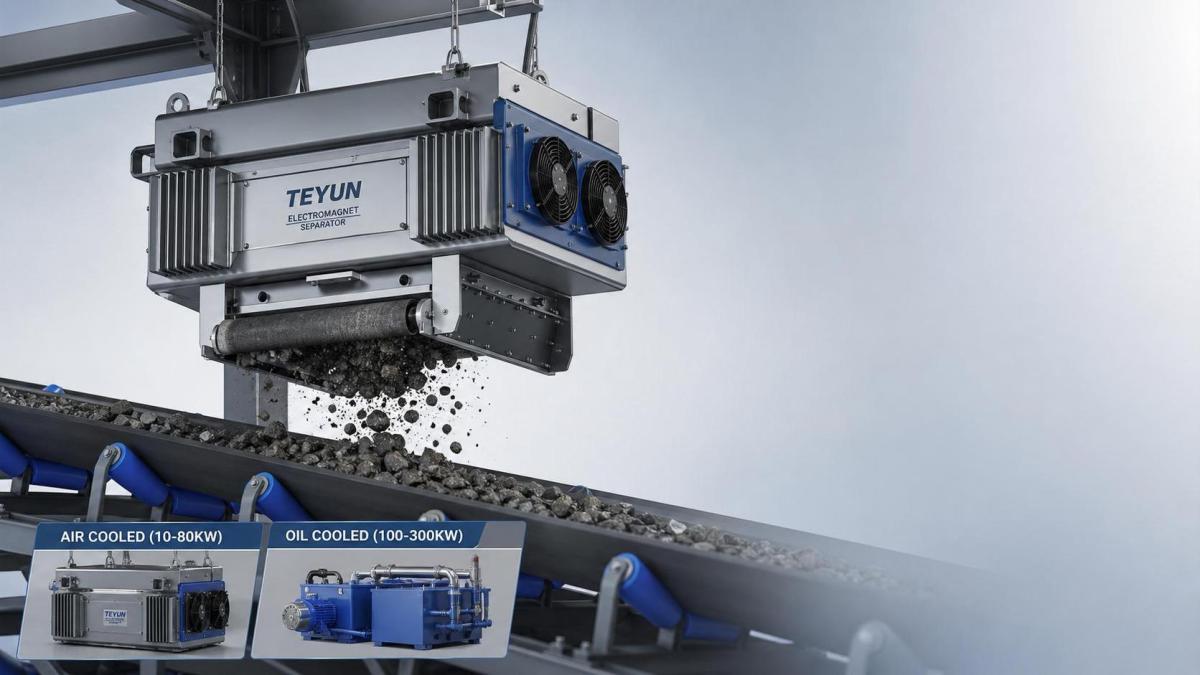
Cooling method is one of the clearest reasons two similar models can have very different prices.
Air-cooled systems usually cost less upfront and have a simpler structure.
They are often suitable for lighter duty cycles or cleaner operating environments.
Oil-cooled models generally carry a higher electromagnetic iron separator price at purchase.
Yet they usually perform better in high-temperature, dusty, and continuous-duty applications.
That added thermal stability can reduce coil stress and extend service life.
A higher price can be justified when the plant cannot tolerate overheating, unstable performance, or frequent maintenance shutdowns.
How Power Rating Affects Purchase Cost and Operating Expense
Power rating has a direct influence on electromagnetic iron separator price because it affects coil size, magnetic field strength, and electrical design.
Higher power models can capture larger or more deeply buried tramp iron.
They are often necessary for wider belts, thicker material layers, or faster conveyor speeds.
Still, extra power should not be purchased without a clear process need.
Overspecifying power can increase capital expense and raise monthly electricity costs without meaningful return.
A better approach is to match power to belt width, burden depth, material type, and contamination risk.
- Confirm conveyor width and throughput.
- Estimate expected iron size and frequency.
- Check running hours per day.
- Compare energy cost across model options.
A Practical Way to Compare Total Budget
For procurement decisions, a simple total cost view is more useful than a single vendor quote.
This gives a clearer picture of which electromagnetic iron separator price is actually competitive.
This method is especially useful when comparing lower-priced standard models with higher-priced heavy-duty units.
In many cases, the better budget choice is the model with lower lifetime cost, not the lower invoice.
Questions Worth Asking Before Approval
A strong buying decision starts with a few direct questions.
- Is the cooling method suitable for ambient heat and dust?
- Is the power rating based on actual belt conditions?
- What cleaning method affects labor cost?
- What spare parts or service intervals should be budgeted?
- What production loss could result from underperformance?
These questions move the conversation from price alone to investment quality.
That shift usually leads to a more defensible approval decision.
Weifang Yuansheng Magnetic & Electrical Equipment Co., Ltd. supplies electromagnetic iron separators and related bulk handling equipment for industrial processing needs.
If your team is reviewing discharge efficiency together with electromagnetic iron separator price, a self-cleaning option may offer better long-term value.
A practical next step is to compare your operating conditions with the Pneumatic Self-Discharging Iron Remover and evaluate whether reduced manual cleaning can improve budget performance.
When electromagnetic iron separator price is assessed through cooling, power, and lifecycle cost, procurement becomes more accurate and easier to justify.
Search from here
Get Free Quotes