



Electric Vibrator Applications: Which Material Handling Problems Can It Solve?
Material handling lines rarely fail because of one major breakdown alone. More often, performance drops when powder bridges in a hopper, sticky bulk solids cling to walls, or uneven feeding disrupts downstream equipment. In that setting, an Electric Vibrator becomes a practical tool rather than a minor accessory. It helps stabilize flow, reduce manual intervention, and improve how storage, conveying, screening, and batching systems work together across many general industrial components applications.
Why Electric Vibrator use keeps growing
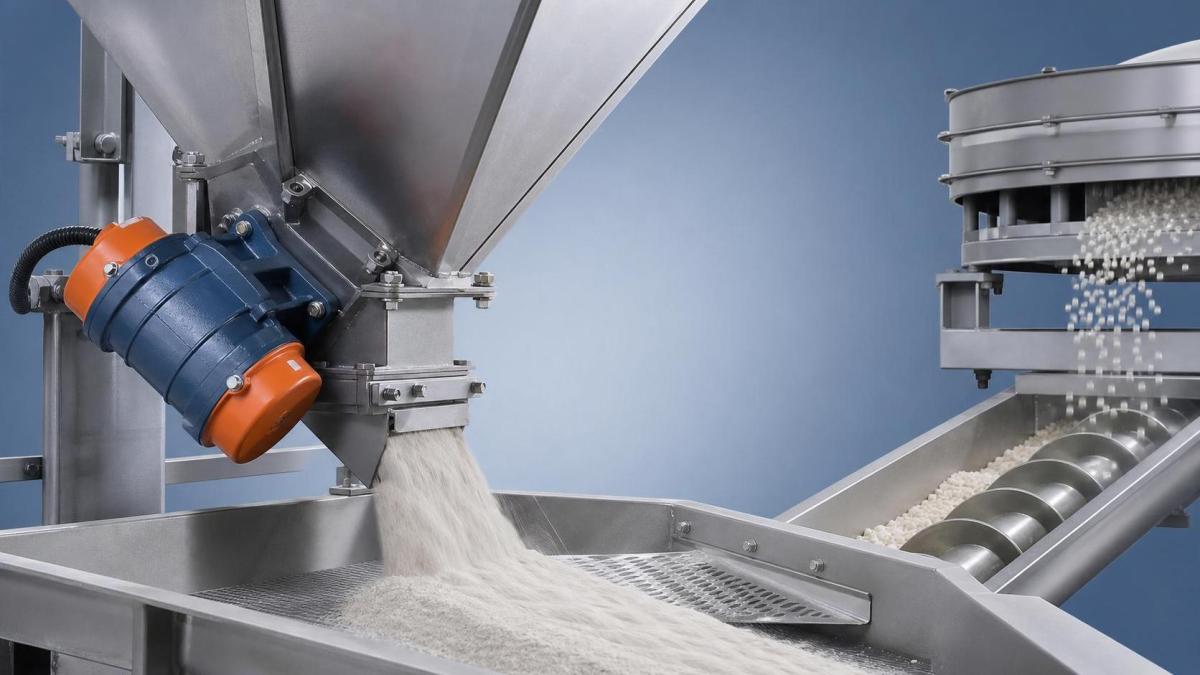
Production systems now handle more varied materials than before. Fine powders, mixed granules, damp particles, recycled materials, and abrasive solids all behave differently during storage and transfer.
That variation creates familiar problems: rat-holing in silos, poor hopper discharge, irregular feeder output, and material build-up on chutes or screens.
An Electric Vibrator addresses these issues by adding controlled vibration to equipment surfaces. The goal is not simply shaking a machine. It is restoring predictable material movement.
This matters in systems where timing, flow rate, and cleanliness affect the next process step. A small disturbance in discharge can become a larger efficiency problem across the line.
What problems can an Electric Vibrator solve?
The most common value of an Electric Vibrator appears when bulk material does not behave as expected under gravity alone.
Bridging and blockage in bins and hoppers
Powders and fine particles often form arches above an outlet. Once that bridge forms, discharge slows or stops entirely.
Mounted vibration can break the arch, loosen compacted layers, and keep material moving toward the outlet with less interruption.
Inconsistent feeding
Feeders depend on stable inflow. When material surges, starves, or hangs up, metering accuracy falls and downstream load becomes uneven.
An Electric Vibrator helps maintain more even material presentation, which supports better dosing, batching, or conveying control.
Screen blinding and poor separation
On screening surfaces, sticky or irregular material can clog apertures. That lowers throughput and weakens separation quality.
Vibration improves particle stratification and movement, helping material pass or reject more efficiently according to process requirements.
Adhesion on chutes and transfer points
Material sticking to chute walls changes flow direction and causes accumulation. Over time, it can trigger cleanup downtime and safety concerns.
In these cases, a properly selected Electric Vibrator reduces wall build-up and supports smoother transfer between equipment sections.
Typical application areas in material handling
Although the principle is simple, application details differ by process. The table below shows where vibration support is commonly useful.
These uses are especially relevant in cement, mining, chemicals, grain, building materials, and recycling, where bulk solids rarely stay uniform.
What determines real performance
Installing an Electric Vibrator does not automatically solve every flow problem. Results depend on how well the unit matches the material and the equipment structure.
Material behavior comes first
Particle size, moisture, density, shape, and temperature all influence flow. Fine dry powder behaves differently from damp granular feed or hot processed solids.
Mounting position matters
Poor placement can waste vibration energy or even worsen uneven discharge. The force path should support the actual restriction point, not just the easiest mounting surface.
System interaction should be checked
Vibration affects nearby structures, feeders, supports, and sensors. In integrated lines, it should be evaluated as part of the wider material handling layout.
This broader view is increasingly important for companies such as Weifang Yuansheng Magnetic & Electrical Equipment Co., Ltd., whose product scope covers electric vibrators, conveyors, separators, detectors, and batching-related systems. In practice, flow stability is rarely isolated from conveying, separation, and metering performance.
How to evaluate an application before selecting equipment
A useful evaluation starts with the problem source, not the device model. That avoids treating every blockage as the same issue.
- Identify whether the issue is bridging, wall adhesion, flow pulsation, or screen blinding.
- Check when the problem appears: startup, continuous operation, humidity changes, or material changeover.
- Review equipment geometry, especially outlet size, wall angle, and transfer point shape.
- Assess whether vibration should support discharge, feeding, separation, or transfer.
- Consider maintenance access, structural strength, and compatibility with upstream and downstream equipment.
That approach makes the Electric Vibrator easier to judge as part of a process solution instead of a standalone add-on.
Connecting vibration with the rest of the line
In many projects, vibration support delivers the best value when paired with the right conveying method. If material moves poorly at the inlet, transfer stability downstream also suffers.
For that reason, it is often useful to compare hopper discharge behavior with the performance of connected conveying equipment, including screw conveyors used for controlled bulk transport.
A practical next step is to review how an Electric Vibrator would work alongside LS / GX Series Screw Conveyor configurations, especially where steady discharge and enclosed conveying need to operate as one continuous process.
With that comparison, it becomes easier to decide whether the main priority is anti-blockage support, feeding consistency, transfer efficiency, or a more coordinated upgrade across the whole material handling line.
Search from here
Get Free Quotes