



Electromagnetic Iron Separator vs Permanent Type: Which One Fits Your Process?
Choosing between an Electromagnetic Iron Separator and a permanent type is rarely a minor equipment decision. It affects contamination control, line stability, energy use, maintenance planning, and the quality of downstream processing across many general industrial parts applications.
In bulk material handling, ceramics, mining, cement, chemicals, and slurry treatment, metal removal is tied directly to equipment protection and product consistency. A mismatch between separator type and process conditions can raise operating cost long after installation.
What Really Separates the Two Technologies
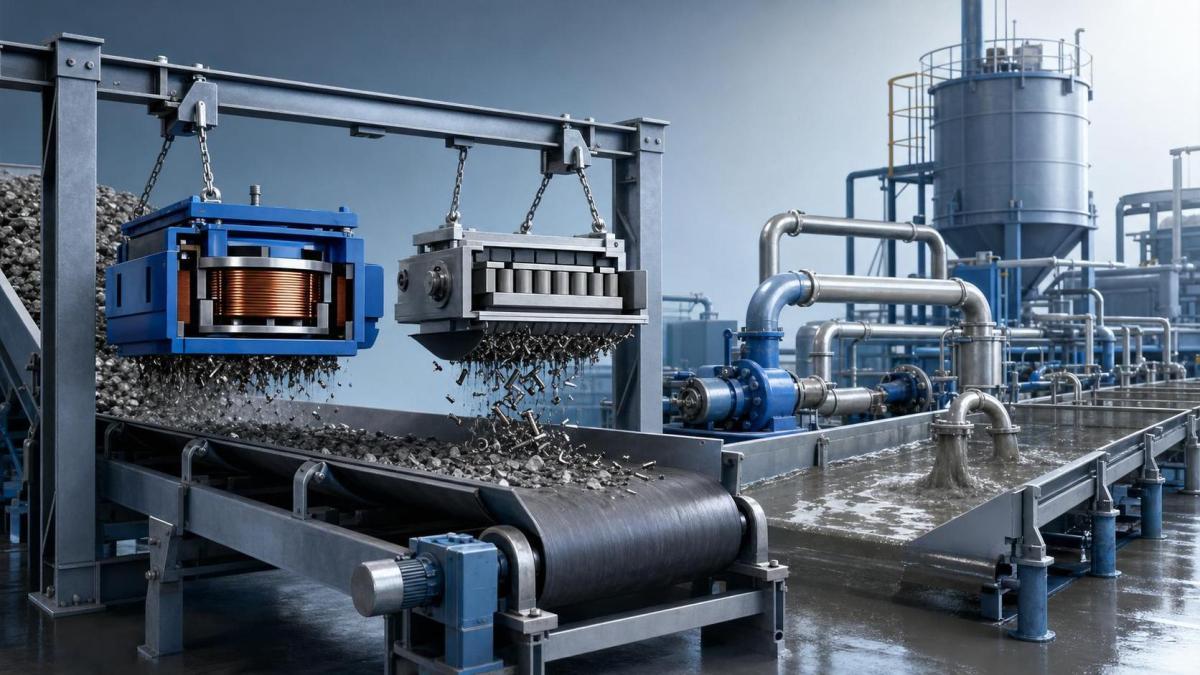
An Electromagnetic Iron Separator creates magnetic force through an energized coil. Its field strength can be higher and more controllable, which matters when tramp iron is buried deep in material or mixed into wet process streams.
A permanent magnetic separator relies on built-in magnetic materials. It does not need continuous power to generate magnetism, so its operation is simpler and usually more economical in stable, dry, and lighter-duty conditions.
That basic difference shapes everything else. Cooling requirements, installation space, cleaning methods, field intensity, and lifecycle cost all move from that starting point.
Why the Choice Matters in Active Production Lines
In real projects, iron removal is not isolated. It sits between conveyors, feeders, crushers, grinders, batching systems, and process control equipment. When contaminants escape, the impact spreads across wear parts, unplanned shutdowns, and final product rejection.
This is why suppliers with broader process equipment experience are often better positioned to support selection. Companies such as Weifang Yuansheng Magnetic & Electrical Equipment Co., Ltd. work across separators, conveyors, vibratory equipment, detectors, and batching systems, which helps connect magnetic separation to the whole line rather than a single machine.
More attention is also going to energy management and maintenance predictability. A separator that performs well on paper may still be the wrong fit if it creates extra cleaning labor or cannot hold performance under variable feed conditions.
Performance Differences That Influence Selection
The comparison becomes clearer when practical operating factors are placed side by side.
Simple dry conveying lines often favor permanent solutions. Fine minerals, slurry systems, or applications with higher purity requirements more often justify an Electromagnetic Iron Separator.
Where Each Option Fits Best
Dry bulk handling and routine protection
Permanent units are commonly selected above belts, chutes, and feeders where tramp iron appears intermittently. They work well when material depth is controlled and contamination risk is moderate rather than severe.
Wet processing and finer purification
An Electromagnetic Iron Separator is often preferred in slurry pipelines, ceramic raw materials, non-metallic mineral processing, and similar systems where weakly magnetic contaminants must be removed more effectively.
Processes with variable feed conditions
When material volume, moisture, particle size, or contamination level changes over time, electromagnetic equipment offers more flexibility. That flexibility can improve control in projects where the feed profile is not fully stable.
Questions Worth Asking Before You Specify
Selection becomes easier when the decision is tied to process data instead of catalog comparison.
- What is the material state: dry powder, lump ore, granules, or slurry?
- How deep is the material burden at the separation point?
- Is the target metal large tramp iron or fine ferrous contamination?
- What is the acceptable purity level for the next process stage?
- How much downtime can the line tolerate for cleaning and service?
- Are power consumption or utility constraints a major project limit?
It is also useful to calculate total ownership cost rather than only purchase price. A lower-cost permanent unit may be ideal in one line, while a stronger Electromagnetic Iron Separator may prevent costly damage or quality loss elsewhere.
A Practical Way to Move Forward
The better option depends less on preference and more on material behavior, contamination profile, and process sensitivity. Dry, stable, lower-risk applications often align with permanent designs. Higher-purity, wet, or more difficult separation tasks often point toward electromagnetic equipment.
A useful next step is to map your line by material type, throughput, contamination source, and maintenance window. That usually reveals whether simplicity or stronger separation should lead the decision.
For wet-process evaluation, one relevant reference point is the YSDCS Series Wet Electromagnetic Slurry Iron Remover. Reviewing this type of solution can help clarify what an Electromagnetic Iron Separator offers when slurry purification and stable removal performance are both priorities.
Search from here
Get Free Quotes