



How to Compare Permanent Magnetic Iron Separator Models for Continuous Production
Choosing a Permanent Magnetic Iron Separator for continuous production is rarely a matter of comparing one headline specification. In processing lines where bulk materials move without interruption, separator performance affects product purity, equipment protection, maintenance rhythm, and unplanned stoppage risk. A useful comparison starts with operating conditions, then moves to magnetic capability, mechanical fit, and long-term reliability across the whole conveying system.
What really changes from one model to another
A Permanent Magnetic Iron Separator is designed to remove ferrous contaminants from moving material streams. That sounds simple, but model differences can be substantial in daily production.
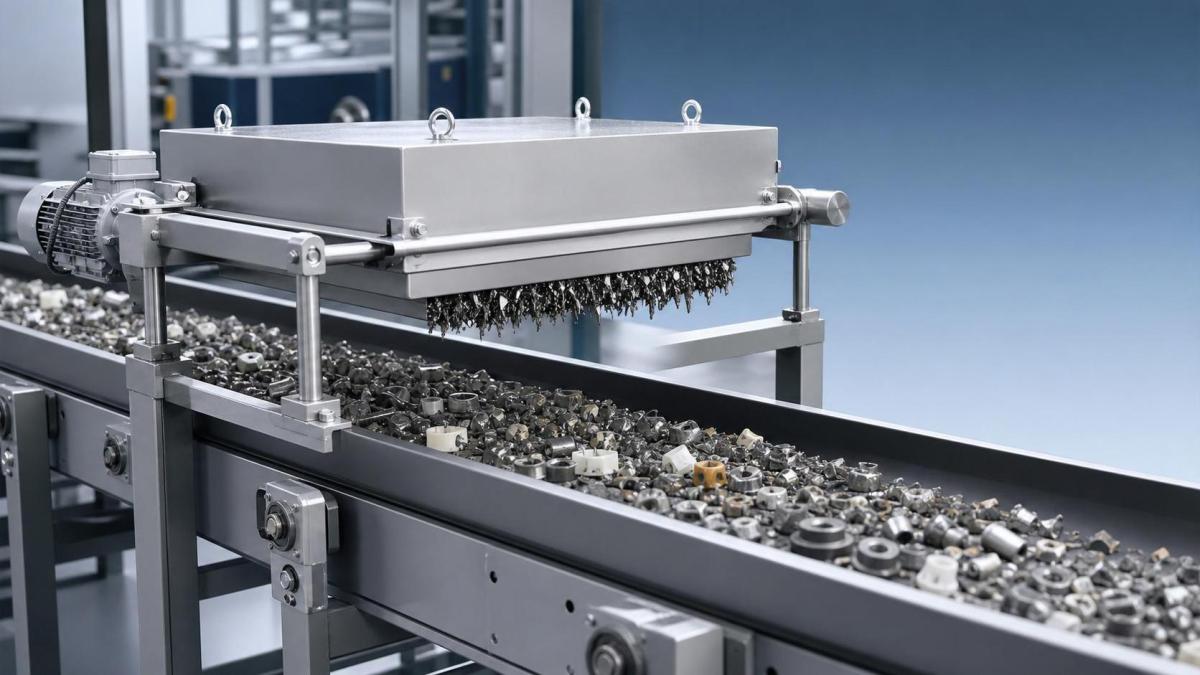
Some units are built for light contamination and stable flow. Others are intended for deeper burden layers, larger tramp iron, abrasive feed, or difficult installation points.
In general spare parts and material handling environments, that distinction matters. A mismatch can leave iron in the product stream or create unnecessary cleaning pressure around the conveyor.
This is why suppliers with broader system knowledge are often more useful during evaluation. Companies such as Weifang Yuansheng Magnetic & Electrical Equipment Co., Ltd. work across detectors, conveyors, magnetic separators, vibratory equipment, and batching systems, which helps place separator selection in a wider process context.
Start with the material, not the catalog
The first comparison point is the material being handled. Particle size, moisture, bulk density, temperature, and iron contamination pattern all influence separator choice.
Fine powder behaves differently from coarse aggregate. Wet or sticky material may hold contaminants deeper in the burden, reducing effective magnetic reach.
It also helps to define the iron source. Wear fragments, bolts, wire, nails, and machining residues do not present the same capture challenge.
Without this baseline, comparing Permanent Magnetic Iron Separator models by magnet grade alone can be misleading.
Magnetic strength should be judged in working conditions
Magnetic strength is important, but it must be interpreted in relation to suspension height, belt width, material layer depth, and expected iron size.
A stronger field on paper does not always mean better separation in practice. Field distribution, working distance, and pole design influence actual capture results.
For continuous production, it is worth asking three direct questions:
- What contaminant size can the model remove at the planned installation height?
- How does performance change when burden depth increases during peak throughput?
- Is the test data based on ideal conditions or realistic production loads?
This line of questioning usually separates robust solutions from nominally impressive specifications.
Mechanical fit is often the hidden decision factor
A Permanent Magnetic Iron Separator must work with the conveyor, chute, and surrounding steel structure. Installation space can limit what looks ideal on paper.
Crossbelt arrangements, inline positions, and suspension frames each impose different constraints. Clearance for maintenance also matters more than many early comparisons assume.
It is useful to review:
- Available headroom above the belt
- Belt width and tracking stability
- Nearby equipment that may interfere with access
- Structural load capacity for suspended installation
In older production lines, retrofit limitations can be more decisive than magnetic rating.
Continuous production favors low-interruption designs
For nonstop operation, cleaning method and maintenance frequency deserve close attention. Manual cleaning may suit lower throughput lines, but it can become a bottleneck on busy systems.
Model comparison should include service intervals, wear points, belt condition, and ease of removing captured iron safely. Simpler access often leads to more consistent maintenance execution.
The best Permanent Magnetic Iron Separator is usually the one that keeps separation stable without forcing repeated stoppages for adjustment or cleaning.
A practical comparison framework
When several models appear suitable, a structured shortlist prevents overreliance on sales sheets. A practical review usually balances process fit, removal performance, and lifecycle demands.
- Match the model to actual material characteristics and contamination risk.
- Confirm working distance under real installation geometry.
- Check whether throughput peaks exceed the unit’s effective range.
- Review cleaning method against shift pattern and maintenance resources.
- Assess compatibility with upstream detectors, conveyors, and downstream equipment.
- Ask for reference cases in similar bulk handling or general component processing lines.
This approach supports better decisions than comparing only initial purchase cost.
Where to take the evaluation next
A sound next step is to document belt speed, burden depth, expected tramp iron size, available space, and acceptable maintenance windows before final model selection.
That information makes technical discussions more precise and reveals whether a Permanent Magnetic Iron Separator should be evaluated alone or as part of a broader separation and conveying arrangement.
If the process also involves mineral handling or related separation stages, reviewing adjacent equipment categories can improve the final decision path. One useful reference point is Limonite Magnetic Separator, especially when the wider process requires a clearer view of magnetic separation options beyond basic iron removal.
Search from here
Get Free Quotes