



Electric Vibrator Price Guide: What Changes Cost Across Industrial Applications?
Why does electric vibrator price vary so much between projects?

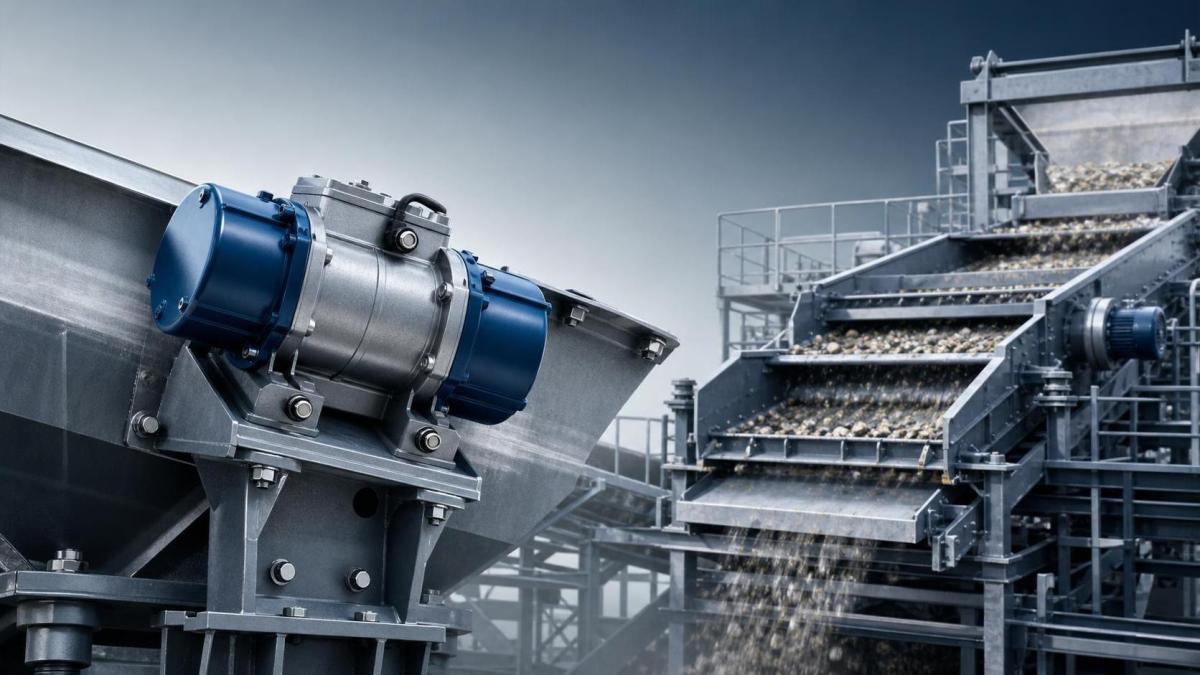
When budget discussions begin, electric vibrator price usually looks simple. In practice, it changes with force level, duty cycle, installation method, and site conditions.
A unit used on a light hopper behaves very differently from one installed on a feeder, conveyor, screening line, or batching system.
That is why two models with similar names can land in very different cost ranges. The lower quote is not always the lower operating cost.
In general spare parts applications, price follows the real workload. Vibration force, motor protection, housing strength, and control accuracy all affect the final figure.
For systems linked with conveyors, separators, or metering equipment, matching matters even more. A mismatched vibrator can create unstable flow, extra wear, and shutdown risk.
Which technical factors change electric vibrator price first?
The first driver is output force. Higher centrifugal force usually means a stronger structure, larger motor, and heavier mounting requirements.
The second driver is operating time. Intermittent use and continuous use should not be priced or evaluated in the same way.
Material and sealing also matter. Dusty, humid, or corrosive environments often need upgraded insulation, better bearings, and stronger enclosure protection.
Control configuration can raise the electric vibrator price as well. Variable frequency control, adjustable amplitude, and integration with automated lines add value, but also cost.
A practical way to compare quotations is to separate four layers of cost:
- Core equipment cost: motor size, force class, and structure.
- Protection cost: sealing, insulation grade, and coating.
- Control cost: wiring, speed adjustment, and system linkage.
- Lifecycle cost: maintenance interval, downtime risk, and spare availability.
Are prices different for feeding, screening, conveying, and batching applications?
Yes, and the difference is often larger than expected. Application type changes both the machine specification and the acceptable tolerance for unstable vibration.
For simple anti-blocking use on bins or chutes, the electric vibrator price may stay moderate because the force demand is predictable.
For screening or conveying, consistency becomes more important. Uneven vibration can reduce throughput, affect grading, or disturb downstream equipment.
In batching or metering lines, precision matters even more. A lower-cost unit that causes material fluctuation may increase total process cost.
Companies working across magnetic separation, conveying, and metering equipment usually evaluate the vibrator as part of a system, not as a standalone accessory.
The table below helps organize that comparison.
How can a lower electric vibrator price become the more expensive choice?
This usually happens when the quote ignores installation reality. A cheaper model may need reinforcement, frequent bearing replacement, or repeated adjustment.
Another issue is oversizing or undersizing. Oversized vibration can damage supports. Undersized vibration can fail to move sticky or heavy material.
Energy use is also overlooked. Over long operating hours, inefficient motors and unstable output can quietly erase any savings from the purchase price.
Needless replacement risk should be part of the calculation. In dusty plants, poor sealing often leads to shorter service life and higher interruption cost.
A better question is not only, “What is the electric vibrator price?” It is also, “What will this unit cost after one year of real use?”
What should be confirmed before comparing quotations?
Quotations become meaningful only after the working condition is clear. In actual applications, a short technical checklist saves time and prevents false comparisons.
- Required vibration force and expected material behavior.
- Operating hours per day and startup frequency.
- Dust, moisture, temperature, and corrosion exposure.
- Mounting position, structural limits, and available space.
- Need for speed control or linkage with other equipment.
- Maintenance access and spare parts lead time.
These points are especially relevant where electric vibrators work beside conveyors, separators, or dosing systems. Compatibility can be worth more than a small upfront reduction.
So how should electric vibrator price be judged in a practical way?
A practical judgment combines purchase price, operating stability, and fit with the full process. That approach gives a clearer picture than comparing model numbers alone.
Where the application involves material handling and dust-sensitive production areas, related equipment choices may also influence the broader investment decision.
For example, when reviewing line efficiency and environmental control together, it can be useful to look at support equipment such as Fiberglass Bag Dust Collector.
The next step is straightforward. Define the load, environment, and control needs first. Then compare electric vibrator price against expected service life, downtime exposure, and system impact.
That method usually leads to better decisions than chasing the lowest quote, especially in lines where vibration performance affects feeding, separation, conveying, or batching stability.
Search from here
Get Free Quotes