



Belt Permanent Magnetic Iron Separator for Conveyor Lines: Where It Works Best
Where a belt permanent magnetic iron separator creates the most value

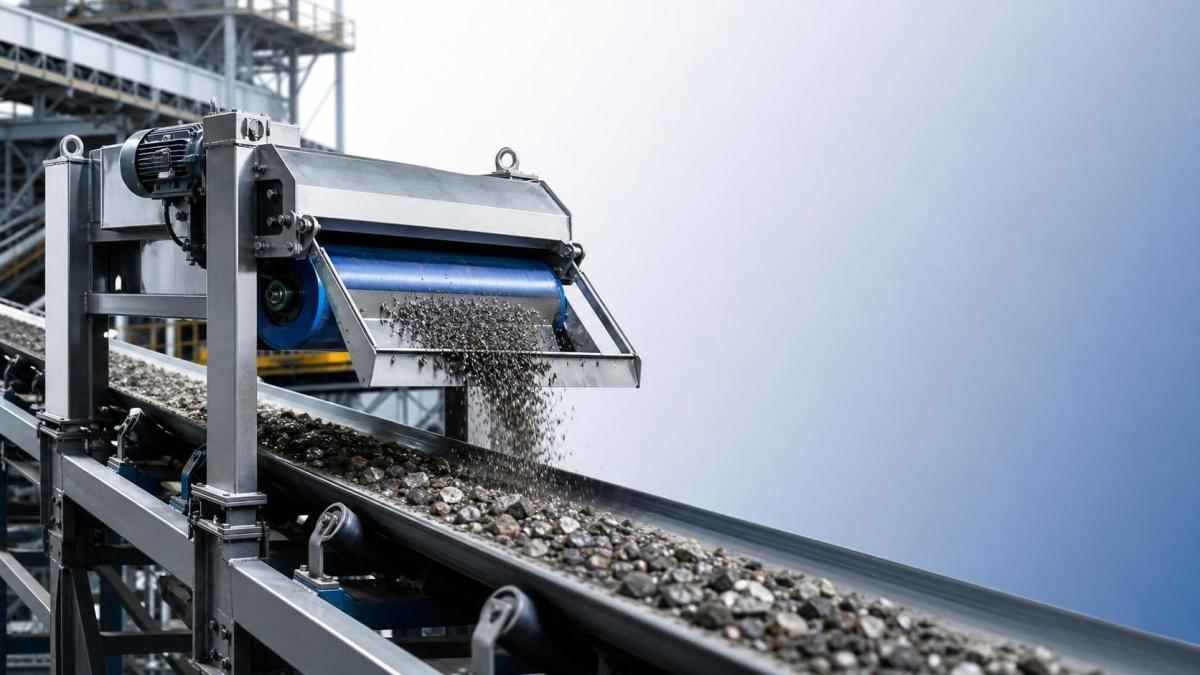
A belt permanent magnetic iron separator earns its place when conveyor lines face steady ferrous contamination, abrasive material flow, or costly shutdown risk.
In practical production, the goal is rarely just metal removal. It is equipment protection, cleaner output, and more stable line performance.
That is why the same belt permanent magnetic iron separator may perform very differently across mining, cement, recycling, and general bulk handling.
Weifang Yuansheng Magnetic & Electrical Equipment Co., Ltd. works across magnetic separation, conveyors, metal detection, and batching-related systems, which reflects a useful reality.
Separation performance depends on the whole line, not on a single device viewed in isolation.
Actual line conditions change the selection logic
The first judgment is material behavior. Fine powder, wet clinker, crushed stone, mixed scrap, and agricultural bulk solids do not carry tramp iron in the same way.
The second judgment is line speed and burden depth. A belt permanent magnetic iron separator above a shallow, even material layer usually captures better than one facing overload.
Installation height also matters. If the magnet sits too far from the burden, small ferrous pieces may pass through without enough attraction.
In many plants, users compare magnet strength first. A better approach is to compare contamination size, belt width, conveyor speed, and discharge expectations together.
Mining and quarry lines usually care more about impact risk
On primary and secondary crushing lines, ferrous tramp metal can damage crushers, tear belts, or jam transfer points.
Here, a belt permanent magnetic iron separator is often valued less for appearance-grade purity and more for avoiding sudden mechanical loss.
The key question is not simply whether metal exists. It is whether long rods, bolts, tool fragments, or wear parts enter before the crusher.
For these lines, crossbelt placement before critical equipment is usually the safer option. It gives the separator time to lift and discharge iron away from the material stream.
Another common issue is burden depth. Large rock on a heavily loaded conveyor can shield smaller ferrous pieces, reducing real capture efficiency.
Cement and powder processing lines focus on stability and downstream protection
In cement plants, the belt permanent magnetic iron separator often works upstream of mills, conveyors, bucket elevators, or weighing sections.
The contamination may be smaller than in mining, yet the operational consequence can be more persistent.
Fine metal pieces can accelerate wear, disturb metering accuracy, or increase unplanned cleaning around enclosed equipment.
This is where line integration matters. If the separator is paired with stable feeding, conveyor control, and metering equipment, the result is usually more predictable.
For dry powder service, users should also check dust conditions, cleaning access, and the ease of removing collected iron during routine maintenance windows.
Recycling lines need a different balance between recovery and throughput
Recycling is less uniform. Material shape, moisture, and ferrous content can change by shift, source, or season.
A belt permanent magnetic iron separator on these lines often supports sorting quality as much as equipment protection.
Mixed waste, shredded material, and secondary resource streams create a wider range of particle sizes. That makes discharge cleanliness and self-cleaning consistency more important.
If recovered iron frequently carries non-ferrous material with it, the issue may be burden thickness, belt speed, or separator position rather than magnet power alone.
In this setting, regular observation of the discharge path is often more useful than relying only on nameplate data.
Different scenarios do not ask the same thing from the same equipment
A short comparison makes the selection logic clearer.
What is often misjudged before installation
One common mistake is treating similar materials as identical applications. Crushed limestone and recycled aggregate may use similar conveyors, but contamination behavior is not the same.
Another mistake is focusing on initial cost while ignoring stoppage cost, belt damage, and manual cleaning time over a full operating cycle.
Some lines also place the belt permanent magnetic iron separator where structure is convenient, not where separation is strongest.
That usually weakens performance more than expected, especially on fast conveyors or uneven loading.
- Check real conveyor speed instead of design speed only.
- Measure the highest material burden, not the average burden.
- Confirm how collected iron will be discharged and removed safely.
- Review future line changes, including higher throughput or new feed sources.
A practical way to decide if this setup fits
A belt permanent magnetic iron separator works best when ferrous contamination is recurring, conveyor operation is continuous, and manual picking is too slow or inconsistent.
It is especially suitable where the line needs dependable protection without the added operating complexity of powered magnetic systems.
Before choosing, map the contamination source, define the largest risk pieces, and compare those conditions with belt width, suspension height, and cleaning method.
If the conveyor line is part of a wider handling or magnetic lifting process, it also helps to review adjacent equipment rather than selecting each device separately.
For operations that also handle heavy steel sections after separation stages, it can be useful to compare line protection equipment with lifting solutions such as MW22 Series Lifting Electromagnet for Bloom and Beam Blank.
That kind of comparison makes the next step clearer: define the real scene, verify the constraints, and build selection standards around how the line actually runs.
Search from here
Get Free Quotes