



Suspended Electromagnetic Iron Separator Installation Tips for Conveyor Safety
Suspended Electromagnetic Iron Separator Installation Tips for Conveyor Safety
Installing a suspended electromagnetic iron separator correctly is essential for protecting conveyor systems, reducing downtime, and improving plant safety.
Placement, suspension height, power setup, and maintenance planning all affect separation performance and equipment life.
This guide focuses on practical decisions that help create stable operation and safer material handling in real conveyor projects.
Start With the Right Installation Position
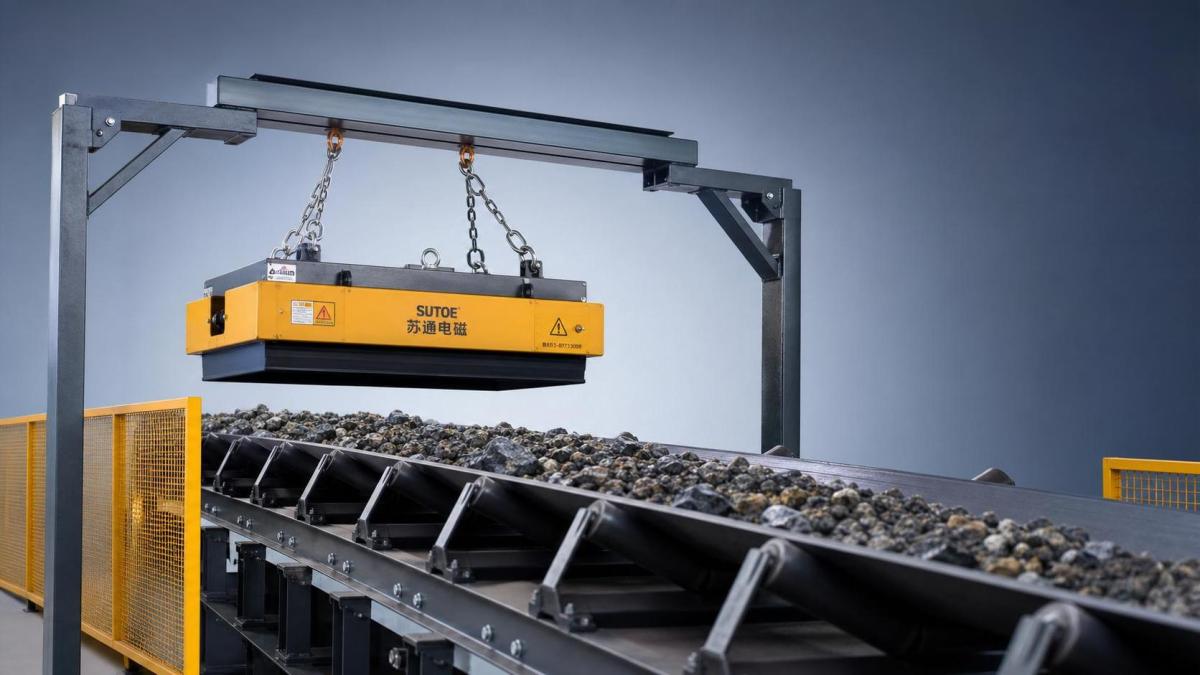
The first decision is where the suspended electromagnetic iron separator will sit above the conveyor.
In most plants, installation happens either across the belt or along the belt direction.
Crossbelt mounting is common when tramp iron appears randomly and must be removed continuously.
Inline mounting often works well when material depth is lower and iron pieces travel in a predictable path.
Before finalizing the layout, check belt width, burden depth, material speed, and transfer point geometry.
A suspended electromagnetic iron separator should cover the main material stream, not just the belt centerline.
This matters even more when conveyed material shifts side to side under unstable loading conditions.
Key Positioning Checks
- Install near a transfer point when possible.
- Avoid areas with severe belt bounce.
- Keep enough discharge space for collected metal.
- Confirm there is access for lifting and maintenance.
Set the Correct Suspension Height
Suspension height directly affects magnetic reach, iron removal efficiency, and conveyor safety.
If the unit hangs too high, the suspended electromagnetic iron separator may miss smaller ferrous contaminants.
If it hangs too low, clearance problems can develop during belt movement or material surges.
The most reliable approach is to calculate height from the top of the material burden, not the empty belt.
Then compare that value with the separator model’s rated magnetic field and lifting capability.
During commissioning, test with actual ferrous pieces that match the site’s contamination risks.
Practical Height Guidelines
- Measure burden height under normal and peak loading.
- Allow extra clearance for belt sag and vibration.
- Verify removal results with a live material test.
- Adjust hanging points before full production starts.
Power Supply and Control Must Match Site Conditions
A suspended electromagnetic iron separator depends on a stable power supply for consistent magnetic force.
Voltage fluctuation, poor cable routing, or undersized protection devices can reduce separation performance.
This is often overlooked during mechanical installation, then discovered only after nuisance shutdowns begin.
Control logic should also align with the conveyor sequence and plant interlock strategy.
In actual operations, delayed starts or unsynchronized stops can create avoidable metal discharge issues.
A clean electrical design helps the suspended electromagnetic iron separator perform as intended every shift.
Electrical Items to Confirm
Build for Structural Safety and Maintenance Access
Mechanical support design should be treated as a safety issue, not a simple mounting task.
The suspended electromagnetic iron separator adds static load, dynamic load, and service access demands.
Support beams, hangers, and fasteners should be checked against real operating conditions.
That includes vibration, dust exposure, washdown needs, and long maintenance intervals.
More importantly, the installation area needs clear paths for inspection, cleaning, and replacement work.
When access is poor, even a well-sized suspended electromagnetic iron separator becomes harder to manage safely.
Maintenance Planning Points
- Leave room for coil inspection and cleaning.
- Provide safe platforms or lifting points.
- Protect the unit from excessive material impact.
- Set routine checks for heat, noise, and fastener loosening.
Commissioning Should Test Real Risk, Not Just Basic Operation
A conveyor can run smoothly during startup and still deliver weak ferrous removal later.
That is why commissioning should include realistic contamination scenarios and measurable acceptance criteria.
Use different iron sizes, different belt loads, and normal operating speed during the final test.
Track removal success, discharge consistency, and control response under continuous operation.
This gives a clearer picture of whether the installation supports long-term conveyor protection.
For manufacturers covering separators, conveyors, detectors, and metering systems, this system-level view is especially practical.
A Smarter Separation Plan for Long-Term Safety
Good results come from coordinated decisions on position, height, structure, controls, and maintenance.
That approach reduces damage risk, limits downtime, and improves overall conveyor reliability.
In broader material handling lines, ferrous separation is often only one part of the recovery strategy.
When non-ferrous metal sorting is also required, it makes sense to review downstream equipment together.
A useful next step is evaluating an Eddy Current Separator for integrated separation performance.
With a practical installation standard in place, conveyor safety improvements become easier to sustain over time.
Search from here
Get Free Quotes