



Magnetic Separator Price Comparison: What Buyers Get at Different Budget Levels
How should magnetic separator price really be compared?

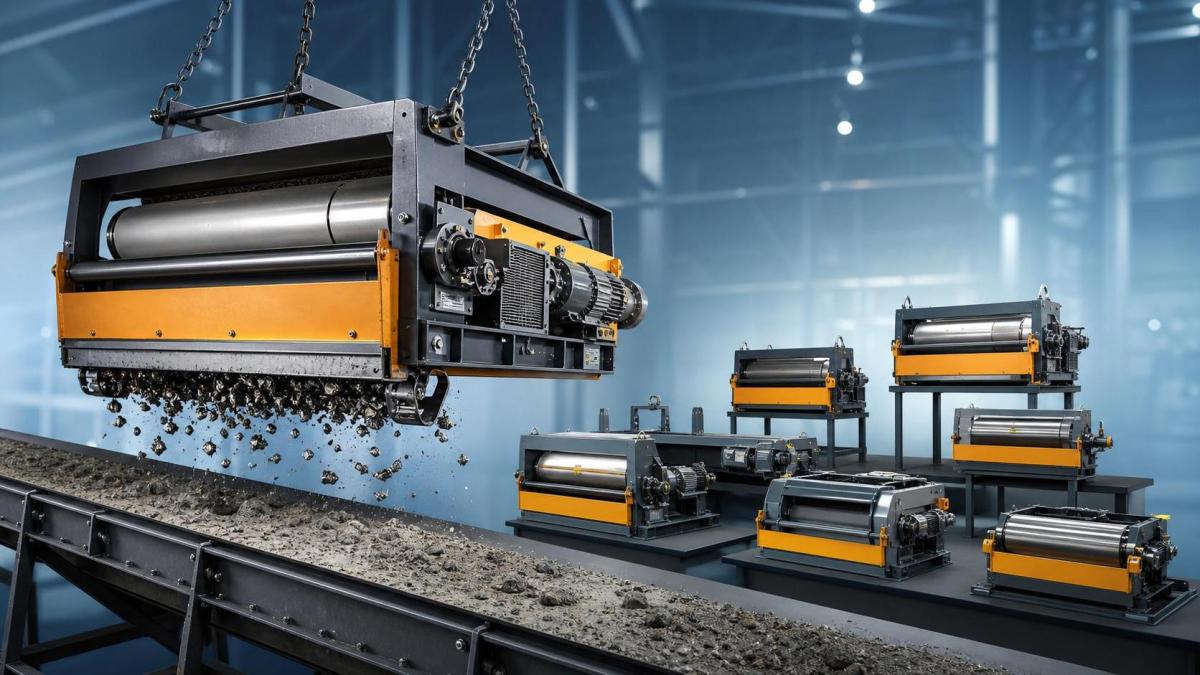
A quote alone rarely tells the full story. Magnetic separator price usually reflects separation strength, build quality, wear resistance, control options, and installation fit.
In practical terms, the cheapest unit may remove less metal, need more cleaning stops, or wear faster in abrasive material lines.
That is why many evaluations now compare purchase cost with operating stability. A lower initial figure can create a higher total cost later.
For equipment used in conveying, batching, cement, and bulk material systems, compatibility matters as much as price. Size, discharge method, and line speed all affect value.
Companies with broader magnetic handling experience, such as suppliers working across separators, conveyors, detectors, and batching systems, often understand these fit issues better.
What do buyers usually get at lower budget levels?
Lower-range magnetic separator price options are commonly chosen for lighter duty lines, cleaner material streams, or projects still validating throughput needs.
These models can still be useful, especially when contamination risk is moderate and operating hours are limited. The issue is not that they are bad.
The more common limitation is narrower operating tolerance. Performance may drop faster when burden depth increases, feed becomes wet, or metal pieces vary in size.
- Simpler magnetic circuit or weaker field consistency
- More manual cleaning and operator attention
- Basic frame materials and standard bearings
- Shorter expected service life under continuous duty
If the application is temporary, low-volume, or non-critical, this magnetic separator price range may still make financial sense.
Why is the mid-range often the most balanced choice?
This is where many cost comparisons become more interesting. Mid-range systems often deliver the best balance between capital spending and operating reliability.
Instead of paying only for stronger magnets, buyers usually gain better structural design, improved self-cleaning performance, and easier integration with existing conveyors.
That matters in factories where downtime is expensive. A separator that maintains stable performance through long shifts can justify a higher quote very quickly.
This range is also where customization begins to matter. Belt width, suspension height, material characteristics, and control requirements can be matched more precisely.
When magnetic separator price is reviewed against maintenance labor and rejected product risk, the middle tier often stands out.
When does a higher magnetic separator price become reasonable?
A premium quote is easier to defend when the separator protects expensive downstream equipment or when contamination directly affects finished product quality.
This is common in cement processing, mining, recycling, and continuous bulk handling lines. In those cases, one shutdown may cost more than the price difference.
Higher budget levels may include stronger heat resistance, better sealing, reinforced frames, intelligent monitoring, or more stable long-term magnetic performance.
The key question is simple: does the line need this extra protection every day, or only in occasional peaks?
If contamination is frequent, material is harsh, and output loss is costly, a higher magnetic separator price can be the more conservative financial choice.
Which hidden costs are often missed during price comparison?
This is where many evaluations become incomplete. Two systems can look similar on paper and still create very different long-term costs.
The missed items are usually operational, not cosmetic. They appear after installation, when the separator meets real material flow.
- Shutdown time for cleaning or belt replacement
- Power use in electromagnetic systems
- Support structure changes and conveyor modifications
- Spare parts lead time and service response
- Metal escape risk that damages crushers, mills, or screens
A more reliable way to compare magnetic separator price is to ask for expected maintenance intervals, wear parts list, and installation conditions before approving any option.
What is the most practical way to choose the right budget level?
Start with the material, not the catalog. Metal type, particle size, moisture, burden thickness, and throughput define what performance is actually needed.
Then compare the quote against line consequences. If separation failure only creates minor cleanup, a lower budget may be acceptable.
If failure stops production or harms downstream equipment, the budget should move upward. That is a risk decision, not only a purchasing decision.
It also helps to review the supplier’s wider system understanding. Experience with metal detection, iron separators, conveyors, and metering equipment can improve sizing accuracy.
Before closing the comparison, prepare a short checklist:
- Required separation target and contamination profile
- Operating hours per day and duty cycle
- Available installation space and conveyor data
- Maintenance access and expected service support
- Total cost over three to five years
In the end, magnetic separator price makes sense only when matched with application difficulty, expected life, and the cost of getting separation wrong.
For lines that also need non-ferrous recovery review, it is worth comparing related solutions such as Eddy Current Separator (Non-Ferrous Metal Separator) alongside iron separation planning.
Search from here
Get Free Quotes