



‹
›
‹
›
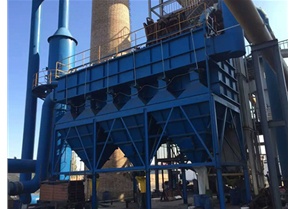
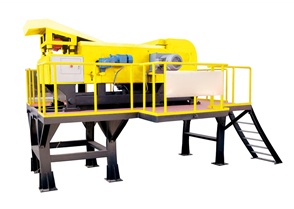
Explosion-Proof Bag Dust Collector
Product Details
Main Features
The main feature of the explosion-proof baghouse dust collector is that it does not use mechanical cleaning devices. Instead, it relies on dust accumulation on the filter bags to a certain thickness, using the self-weight of the dust, or utilizing filter bag deformation during fan start/stop, or manual tapping and shaking of the filter bags to dislodge the dust.
Advantages:
High dust collection efficiency
Reliable operation
Simple management
Low initial investment
Long filter bag life
Disadvantages:
Low specific load on filter bags
High fabric consumption during initial installation
Large floor space requirement
Types
The explosion-proof baghouse dust collector is available in two configurations: top inlet and bottom inlet.
Top Inlet Type: The airflow direction is the same as the dust falling direction, providing better dust collection performance. However, it requires an additional gas distribution chamber, increasing the overall height of the collector.
Bottom Inlet Type: The overall height is lower. However, because the airflow direction is opposite to the dust falling direction, it hinders dust settling and results in poorer collection performance.
Operation Modes
The explosion-proof baghouse dust collector is typically operated under positive pressure due to its relatively simple construction. However, because the dust-laden gas must pass through the fan, the fan blades and housing experience severe wear. It can also be operated under negative pressure, but this requires a tighter construction, so it is less commonly used.
Features & Advantages
High Collection Efficiency: Can reach 99.99% or higher.
Stable Performance: Collection efficiency is not affected by dust resistivity, concentration, or particle size. Boiler load changes and flue gas volume fluctuations have little impact on the outlet emission concentration.
Compartment Design: The collector is typically designed with multiple compartments and built-in margins, allowing for rotating maintenance without interrupting boiler operation.
Fine Particle Capture: Effectively captures fine dust particles and removes heavy metal particulates from fly ash more efficiently than electrostatic precipitators.
Fewer Auxiliary Devices: Less technically demanding than electrostatic precipitators.
SO₂ Removal: Can be combined with spray drying and other equipment to address SO₂ pollution in flue gas.
Installation Precautions & Preparation
Before Installation:
In addition to verifying the civil foundation, inspect the foundation quality. Proceed with installation only after it is approved.
The hopper, housing, air chamber, and all connecting parts of the collector must have good sealing performance. After assembly, use a penetration method to check for leaks.
The blow pipe system and all component connections should be tested for air tightness — no air leakage is permitted.
Count and check all components to ensure that all required parts are complete.
Inspect the quality of all components for defects, deformation, or rust. Repair or replace any unqualified parts. External components must have a quality certificate and no obvious surface wear before assembly.
When installing color-coated steel and galvanized sheets, follow the principle of bottom before top, interior before exterior to prevent rainwater ingress. The appearance should be aesthetically pleasing.
Before installing filter bags, remove all debris from the air chamber and tube sheet. Then remove all installation objects from the housing and hopper, such as lifting lugs, tools, small parts, welding rods, and slag.
Recommended Products
Search from here
Get Free Quotes