


‹
›
‹
›
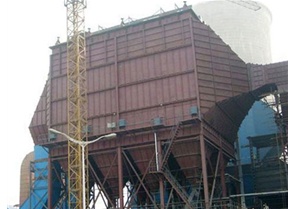
Lime Kiln Bag Dust Collector
Product Details
Filter Media
The lime kiln baghouse dust collector uses high-temperature and corrosion-resistant filter media. Based on the characteristics of flue gas from rotary kilns, our company uses the cost-effective LF series high-temperature composite filter media. This filter media contains 20% P84 fibers with a PTFE base fabric. The post-treatment uses high-concentration PTFE impregnation, which not only solves the problem of high flue gas temperatures from rotary kilns but also gives the filter media strong corrosion resistance. This makes it suitable for carbide slag cement kiln tails.
Cleaning Structure
The lime kiln baghouse dust collector features strong cleaning capability, low equipment resistance, a small footprint, low energy consumption, and minimal maintenance requirements. It has been widely used in industrial applications such as lime kiln flue gas purification, dust control at workplaces, and material transport recovery.
Dust-laden gas enters the lower part of the middle housing via the inlet pipe and flows into the hopper. There is no baffle plate inside the middle housing, allowing the gas flow to be evenly distributed through the filter bags. After passing through the filter bags, dust is retained on the outer surface of the bags. The purified gas is discharged through the outlet of the upper housing.
Alternative Name & System Composition
The lime kiln baghouse dust collector is also known as a vertical kiln wet dust collector. It mainly consists of a dust collection tower, ash-water separator, spray system, and fan induction system. These components are connected through piping to form a complete operating system that continuously performs dust collection, ash-water separation, dust recovery, and water recycling.
Compared to other types of dust collectors, this system has lower investment — half that of an electrostatic precipitator and one-third that of a large baghouse dust collector. It has a wide applicability to flue gas temperature and imposes no special requirements on the operation of the vertical kiln. The installed power is low (below 10 kW), resulting in low operating costs. The recovered dust can be directly used for pelletizing, and water is recycled, creating no secondary pollution.
Working Principle
Under jet induction, exhaust gas from the two chimneys of the vertical kiln enters the dust collection tower tangentially, creating a cyclone effect. Due to centrifugal force, some dust particles are thrown against the tower wall and captured by a water film, achieving primary dust removal. As the gas continues to rise, it undergoes spray and scrubbing for secondary dust removal. The collected ash-water mixture flows into an ash-water separator for separation. The settled sludge is scraped by a scraper mechanism into a twin-shaft mixer for repellettizing. The clear water overflows from the upper part of the tank for recycling.
Structural Components
1. Air Intake System
Includes air inlet, inlet control valve, baffle plate, air guide plate, distribution screen, etc.
Dust-laden gas enters each bag chamber via the conveying pipe, where the velocity decreases and most dust falls directly into the hopper, reducing the load on the filter bags.
The remaining dust and flue gas pass through the air guide plate and distribution screen into the bag chamber, filling the entire space.
The baffle plate and distribution screen ensure that both dust-laden and cleaning air flows move along the filter bag direction.
If online cleaning is required, this airflow direction significantly reduces secondary dust re-entrainment during cleaning.
2. Dust Filtration System
Includes filter bags, bag cages, tube sheet, etc.
Each filter bag is placed over a cage to prevent the bag from collapsing.
The tube sheet supports the bag assemblies, separates the bag chamber from the clean air chamber, and serves as a maintenance platform for the filtration system.
3. Cleaning System
Includes clean air manifolds, compressed air pipes, pulse valves, poppet valves, venturi nozzles, etc.
The clean air manifolds are arranged in parallel inside the pre-assembled top clean air chamber. Each manifold has multiple small nozzles, each corresponding to a venturi nozzle on a filter bag.
The manifolds connect to an external compressed air pipe, with the starting end inserted into a slot and the end welded to a support angle and secured with pipe clamps.
A compressed air pipe is installed on top of the collector, connected to the clean air manifolds. Compressed air is controlled by pulse valves, which are connected to solenoid valves. The entire cleaning system is controlled by the collector's control system.
Differential pressure sensors are mounted at the air outlet and inlet. The cleaning cycle is controlled based on the differential pressure signal.
4. Exhaust System
Includes outlet control valve, exhaust pipe, and other components for discharging purified gas.
5. Dust Discharge System
Includes air cannons or vibrators for hopper cleaning, electric heaters, manual gate valves, airlock valves (double-flap valves or rotary feeders), screw conveyors, chain conveyors, or pneumatic conveying pumps.
6. Air System
Includes air receiver tank, compressed air pipes, pressure reducing valve, pressure gauge, and air source triple (filter, regulator, lubricator).
7. Protection System
Includes bypass system, bag leak detection device, bag pre-coating device, and online monitoring.
Applications
The lime kiln baghouse dust collector is widely used for dust control in:
Metallurgical industry: steelmaking blast furnaces, coal injection preparation plants
Building materials industry
Power industry
Chemical industry
Carbon black production
Asphalt concrete mixing
Boilers and flue gas treatment
And other dust control applications
Recommended Products
Search from here
Get Free Quotes