


‹
›
‹
›
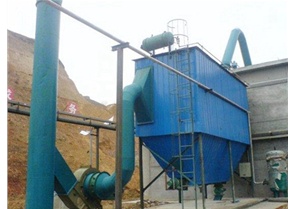
Mechanical Reverse-Air Dust Collector
Product Details
Product Overview
The mechanical reverse-air dust collector is a low-energy cleaning, external-filtration type baghouse dust collector. It uses flat bags with trapezoidal or wedge-shaped cross-sections. Compared to round filter bags, under the same filtration load per unit area of filter fabric, this design occupies less floor space and has a more compact structure — meaning more filtration area can be arranged per unit volume. This is a key feature of this collector. It has been gradually promoted and adopted in factories across the machinery, metallurgy, power, and other industries.
I. Structure and Working Principle
The mechanical reverse-air dust collector consists of the following four parts:
1. Upper Housing: Includes the dust collector cover, rotating lifting device, clean air chamber, bag access door, inspection port, and air outlet.
2. Middle Housing: Includes the tube sheet, filter bags, bag cages, bag inlets, filtration chamber body, air inlet, and access door.
3. Lower Housing: Includes the support frame, hopper, star-shaped discharge valve, and mounting base.
4. Reverse-Air Cleaning Mechanism: Includes the rotating arm, nozzle, multi-zone reverse-air cleaning device, circulating air duct, reverse-air duct, reverse-air fan, and rotating arm speed reduction mechanism.
The reverse-air rotating arm is driven by a speed reducer mounted on the top cover. The reverse-air fan is floor-mounted and connected to the rotating arm via a central pipe. For filter bags arranged in three or four concentric circles, the rotating arm is equipped with a multi-zone reverse-air cleaning device.
The star-shaped discharge valve, speed reducer and motor, reverse-air fan, rotating arm speed reduction mechanism, and circulating air duct system are supplied as auxiliary components. Upon customer request, we can also supply these components. Platforms and ladders are not shown in the general assembly drawings. These items, as well as the reverse-air fan foundation and circulating air duct system, should be designed and installed according to specific site conditions.
Working Principle
Filtration Mode: Dust-laden gas enters the upper space of the filtration chamber tangentially. Due to the scroll-type inlet, large particles and agglomerated dust settle into the hopper along the chamber wall under centrifugal force. Small particles disperse into the spaces between the bags and are captured by the filter bags, adhering to the outer surface of the bags. The purified air passes through the filter bag walls, then through the bag inlets on the tube sheet, and collects in the clean air chamber, from which it is drawn out by the fan and discharged into the atmosphere.
Cleaning Mode: As filtration continues, captured dust gradually accumulates, increasing the resistance of the filter bags. When the resistance reaches the upper limit of the reverse-air control setting, the reverse-air fan can be started manually or automatically via a signal from a differential pressure transmitter. Our company can also supply the automatic control device. Reverse-air flow with sufficient momentum is blown by the rotating arm nozzle into the filter bag inlet, blocking the filtration airflow and changing the pressure conditions inside the bag, causing substantial bag vibration that dislodges accumulated dust. The rotating arm performs reverse-air cleaning on each zone or bag in sequence. When the filter bag resistance drops to the lower limit, the reverse-air mechanism is manually or automatically shut down. To save reverse-air fan power and reduce reverse-air volume, the three- and four-circle (i.e., 144ZC-II and 20ZC-type) baghouse dust collectors are equipped with a multi-zone reverse-air cleaning mechanism that cleans only one filter bag at a time.
Recommended Products
Search from here
Get Free Quotes