

‹
›
‹
›
Vacuum Ceramic Filter
Product Details
Product Overview
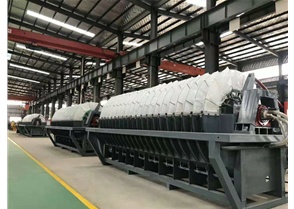
The vacuum ceramic filter is a high-efficiency, energy-saving solid-liquid separation device that uses microporous ceramic plates as the filtration medium, operating on the principle of capillary action. This equipment is widely used in mining concentrate dewatering, tailings dry stacking, chemical processing, environmental protection, and other industries. Compared with traditional filters, it offers significant advantages including clear filtrate, low cake moisture content, low energy consumption, and a high degree of automation.
Core Advantages
High-Efficiency Filtration: Uniform porosity of microporous ceramic plates with strong capillary action — filtrate solid content is extremely low (typically <50 ppm) — cake moisture content as low as 6–9%
Significant Energy Savings: Low vacuum requirement (-0.07 to -0.09 MPa) — energy savings of over 80% compared to conventional filtration equipment
Automatic Operation: PLC fully automatic control — cycles of filtration, dewatering, cleaning, and backwashing without manual intervention
Filter Plate Regeneration: Equipped with ultrasonic cleaning and automatic backwashing system — effectively restores ceramic plate filtration performance — extends service life
Wear & Corrosion Resistant: Ceramic filter plates have high hardness, resistance to acids, alkalis, and high temperatures — suitable for various complex operating conditions
Easy Maintenance: Compact structure — few wear parts — low maintenance cost
Working Principle
During operation, the ceramic plates immersed in the slurry are subjected to vacuum, allowing water to pass through the microporous ceramic plates into the filtrate pipeline for discharge. Solid particles are retained on the surface of the ceramic plates, forming a filter cake. After the filter cake is discharged by the scraper, the ceramic plates undergo backwashing and ultrasonic cleaning to restore filtration capacity, then enter the next working cycle.
Typical Applications
Mining Industry: Dewatering of iron concentrate, copper concentrate, gold concentrate, sulfur concentrate, lead-zinc concentrate, nickel concentrate, and other concentrates
Tailings Treatment: Tailings dry stacking — enabling water resource recovery and environmentally friendly storage
Non-Metallic Minerals: Dewatering of quartz sand, feldspar, kaolin, graphite, etc.
Chemical Industry: Solid-liquid separation of chemical slurries, pigments, dyes, etc.
Environmental Protection: Sludge dewatering, wastewater treatment
Recommended Products
Search from here
Get Free Quotes