



Electric Vibrator for Feeder: How to Match Vibration Force to Feed Rate
Electric Vibrator for Feeder: How to Match Vibration Force to Feed Rate
Choosing the right electric vibrator for feeder is essential for keeping material flow stable, efficient, and safe in daily operations.
If vibration force does not match feed rate, uneven flow, blockage, and wasted energy can appear very quickly.
This guide explains how to match force and feed rate more accurately for better output and lower maintenance pressure.
Why Matching Vibration Force Matters
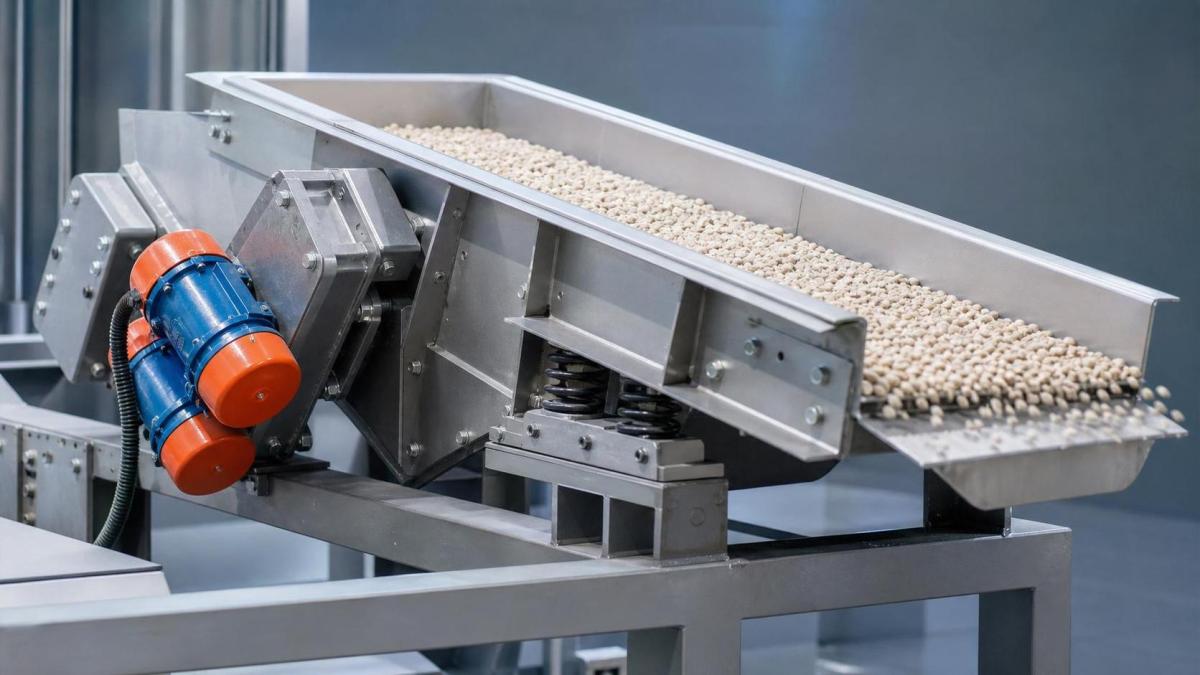
An electric vibrator for feeder works by pushing material forward through controlled vibration.
That sounds simple, but feed performance depends on several connected variables.
When force is too low, material may crawl, bridge, or stop at the inlet.
When force is too high, the feeder can throw material too fast or create unstable surges.
This also means faster wear on springs, troughs, liners, and mounting structures.
In practical terms, the right electric vibrator for feeder protects both process stability and equipment life.
Start With Feed Rate Requirements
Before adjusting vibration force, define the target feed rate clearly.
Use units that match your line, such as tons per hour, kilograms per minute, or pieces per minute.
Then check whether the flow must stay constant or can vary by batch.
A stable process usually needs tighter force control than an intermittent process.
It helps to record three values during normal production:
- Minimum acceptable feed rate
- Normal operating feed rate
- Maximum short-term feed rate
These numbers give a realistic range for selecting an electric vibrator for feeder and setting safe operating limits.
Key Factors That Change Required Force
Feed rate is never controlled by force alone.
Material behavior often has a bigger impact than many operators expect.
1. Bulk Density
Heavy material needs more vibration force than light material at the same target feed rate.
A dense mineral and a light powder will not respond the same way.
2. Particle Size and Shape
Fine powder may compact and resist movement.
Large or irregular particles may bounce, separate, or create uneven loading.
3. Moisture and Stickiness
Wet or sticky material usually needs more careful tuning, not simply more force.
Too much vibration can smear material and worsen buildup.
4. Trough Design and Installation Angle
A wider or longer trough changes load distribution and required driving force.
Inclined installation may also increase the force needed for the same output.
A Practical Method to Match Force to Feed Rate
A practical setup method is better than guessing from sound or visual movement alone.
- Start at a moderate force setting recommended by the equipment supplier.
- Run the feeder with actual material, not empty.
- Measure the real feed rate over a fixed time period.
- Increase or reduce force in small steps.
- Record force level, flow result, current draw, and material behavior.
- Stop when the target rate is stable and the machine remains smooth.
This step-by-step approach makes electric vibrator for feeder adjustment more repeatable across shifts and material changes.
It also helps separate real vibration issues from upstream hopper or gate problems.
Signs the Force Is Wrong
Some warning signs are easy to see once you know what to watch.
In many plants, the best electric vibrator for feeder setting is not the strongest one.
It is the setting that keeps flow steady with the least stress.
How to Improve Accuracy Over Time
Matching force once is useful, but operating conditions rarely stay constant.
Raw material changes, weather shifts, and wear can all move the feed rate.
A simple routine improves long-term accuracy:
- Inspect springs, bolts, and liners on a fixed schedule
- Clean buildup from troughs and discharge points
- Compare actual feed rate with control settings weekly
- Keep a material log for moisture, density, and particle changes
- Train teams to adjust in small steps instead of large jumps
These habits reduce guesswork and help the electric vibrator for feeder stay consistent under real production pressure.
Choosing a Reliable Feeder Solution
A good match between vibration force and feed rate starts with proper equipment selection.
For operations that need stable, controllable feeding, model design and control performance matter as much as raw force.
Weifang Yuansheng Magnetic & Electrical Equipment Co., Ltd. supplies conveying and feeding solutions for demanding industrial applications.
A practical option for guided selection is the DZ Series Electromagnetic Vibrating Feeder.
It can help improve controllability, reduce uneven flow, and support more accurate feeder adjustment in daily use.
When selecting any electric vibrator for feeder, focus on measurable feed goals, real material behavior, and stable long-term operation.
Search from here
Get Free Quotes